

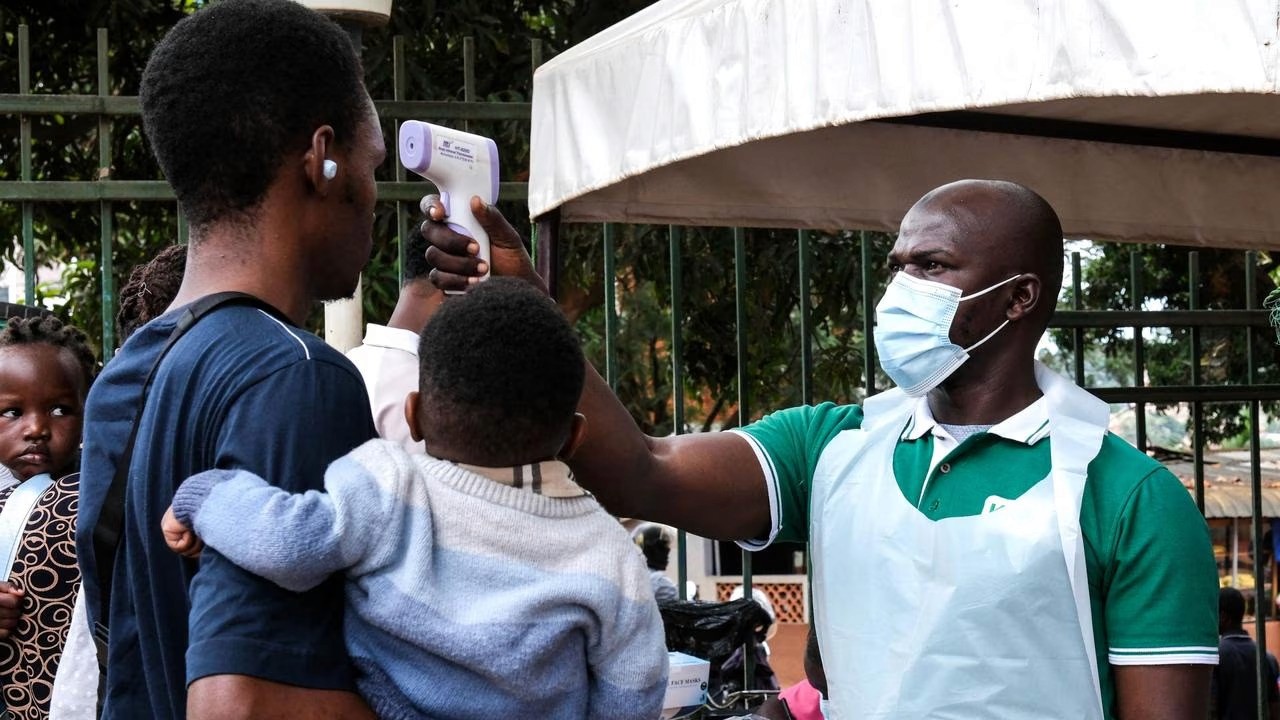
The World Health Organization has declared the Ebola outbreaks in the Democratic Republic of the Congo and Uganda. Image: File
Congo
1Min
South Africa
WHO declares Ebola outbreaks in DRC and Uganda an international health emergency
The World Health Organization has declared the Ebola outbreaks in the Democratic Republic of the Congo and Uganda a public health emergency of international concern, as President Cyril Ramaphosa urges African nations to strengthen cross-border cooperation and pandemic preparedness.

The World Health Organization (WHO) has declared the Ebola outbreaks in the Democratic Republic of the Congo (DRC) and Uganda a “public health emergency of international concern” after more than 300 suspected cases and 88 deaths were reported.
WHO Director-General Tedros Adhanom Ghebreyesus said in a social media post on Sunday that while the situation does not yet meet the criteria for a pandemic emergency, neighbouring countries remain at high risk of further spread.
President Cyril Ramaphosa has called for urgent continental cooperation and stronger health preparedness measures following the outbreaks.
Speaking in his capacity as African Union Champion on Pandemic Prevention, Preparedness and Response, Ramaphosa praised the governments of the DRC and Uganda for acting swiftly and transparently after confirming outbreaks of the Bundibugyo strain of the Ebola virus disease.
He said early detection, rapid reporting and decisive interventions were critical in preventing the outbreaks from escalating into a wider regional crisis.
Ramaphosa also expressed solidarity with affected communities and frontline healthcare workers, while commending neighbouring countries for strengthening border surveillance and emergency response systems.
The president further praised the efforts of the Africa Centres for Disease Control and Prevention and the World Health Organization for supporting affected countries and coordinating a continental response.
He warned that increased cross-border movement, combined with insecurity and humanitarian challenges in the region, heightened the risk of further transmission.
Ramaphosa urged African countries to intensify cross-border collaboration, improve surveillance systems and strengthen information sharing, particularly in conflict-affected and displaced communities.
He also stressed the importance of protecting women, children and adolescents during the crisis to ensure essential healthcare services remain uninterrupted.
According to Ramaphosa, the outbreaks have once again exposed the need for African countries to invest in resilient public health systems, emergency response infrastructure, laboratory capacity and trained healthcare personnel, especially as international development assistance continues to decline.
The president called on African Union member states and international partners to provide financial, technical and medical support to bolster pandemic prevention, preparedness and response efforts across the continent.
He said Africa has the experience and institutional capacity needed to contain the outbreaks, but warned that success would depend on urgency, unity and collective action.