



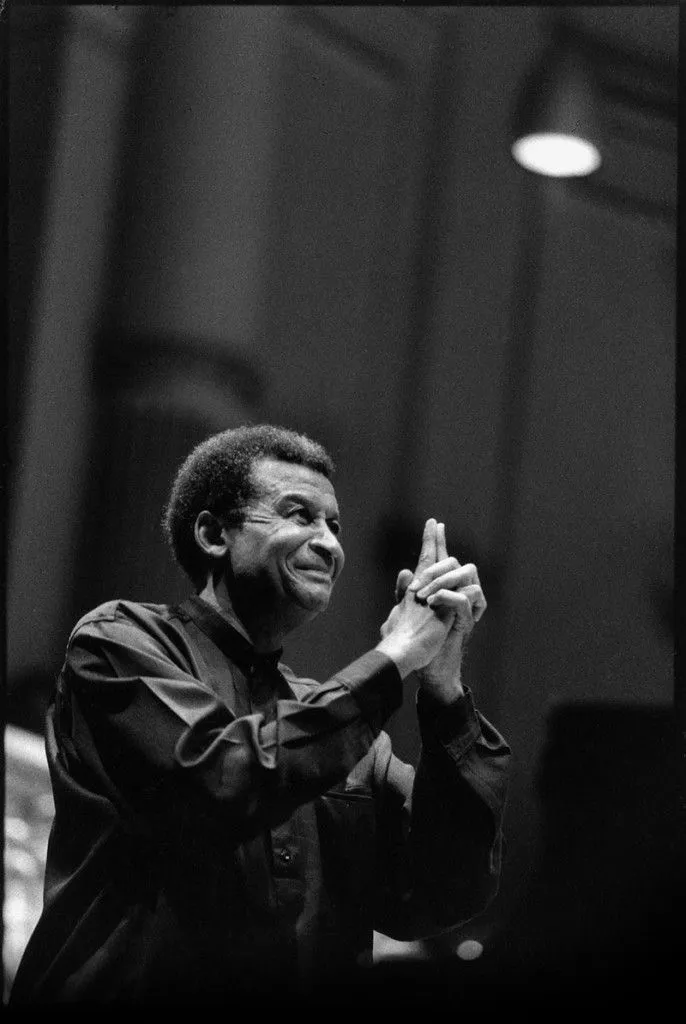

South Africa is mourning the loss of internationally acclaimed jazz musician Abdullah Ibrahim. Image: Supplied
Germany
1Min
South Africa
South Africa bids farewell to jazz giant Abdullah Ibrahim
Tributes have poured in from across South Africa and around the world following the death of legendary jazz musician Abdullah Ibrahim at the age of 91, with leaders describing him as a cultural ambassador, freedom storyteller and one of the country's greatest artistic treasures.

South Africa is mourning the loss of internationally acclaimed jazz musician Abdullah Ibrahim, who passed away peacefully in Germany at the age of 91 following a short illness.
The legendary pianist, composer and cultural icon leaves behind a remarkable legacy spanning more than seven decades, during which he became one of the most influential figures in global jazz while remaining deeply connected to his South African roots.
News of his passing prompted an outpouring of tributes from political leaders, artists and institutions, all reflecting on the immense contribution he made to music, culture and the struggle for freedom.
Minister of Sport, Arts and Culture Gayton McKenzie described Ibrahim as one of the greatest musicians South Africa has ever produced.
Born in District Six in Cape Town in 1934, Ibrahim rose from humble beginnings to become a global ambassador for South African music. McKenzie said that in a society that sought to define him by the colour of his skin, Ibrahim responded not with bitterness but through the beauty of music.
From his early days with the Jazz Epistles to his iconic composition Mannenberg, Ibrahim's work became the soundtrack of resilience, hope and resistance during apartheid.
"When apartheid forced him into exile, he carried South Africa with him and gave our story to the world," McKenzie said, adding that his music crossed boundaries and united people through its deeply spiritual message.
ActionSA president Herman Mashaba echoed those sentiments, describing Ibrahim as far more than a musician.
"He was a cultural ambassador, a storyteller and a custodian of South Africa's rich and complex history," Mashaba said.
According to Mashaba, Ibrahim's music gave voice to the hopes, struggles and aspirations of generations of South Africans, while his life demonstrated the power of art to challenge injustice and preserve collective memory.
Cape Town Mayor Geordin Hill-Lewis said the Mother City had lost one of its greatest cultural ambassadors.
"Abdullah Ibrahim carried the sounds, stories and spirit of Cape Town to audiences around the world," Hill-Lewis said.
He noted that generations of Capetonians found inspiration in Ibrahim's music and encouraged young people to explore the rich heritage he leaves behind.
The mayor highlighted Mannenberg, recorded in Cape Town in 1974, as one of the most recognisable pieces of South African music and a powerful symbol of the country's struggle for freedom.
Deputy President Paul Mashatile also paid tribute, reflecting on Ibrahim's contribution as South Africa prepares to commemorate the 50th anniversary of the 1976 Soweto Uprising.
Mashatile said Ibrahim used his musical talent to tell the South African story during the darkest days of apartheid, throughout the country's democratic transition and into a new era of freedom.
Known affectionately to many as "Dollar Brand", Ibrahim's influence extended far beyond South Africa's borders, earning him international acclaim while never losing the essence of his homeland.
His final South African public performance took place at the Cape Town International Jazz Festival earlier this year, where audiences witnessed one last masterclass from a musician whose artistry captivated generations.
His partner, Dr Marina Umari, said Ibrahim passed away peacefully with South Africa and its people in his heart.
Though his passing marks the end of an extraordinary life, tributes suggest his music and influence will continue to resonate for generations to come.
As South Africans reflect on the life of a man whose melodies became woven into the nation's history, one sentiment remains clear: Abdullah Ibrahim may have played his final note, but his music will never fade.
Hamba kahle, Abdullah Ibrahim. Your legacy lives on.