



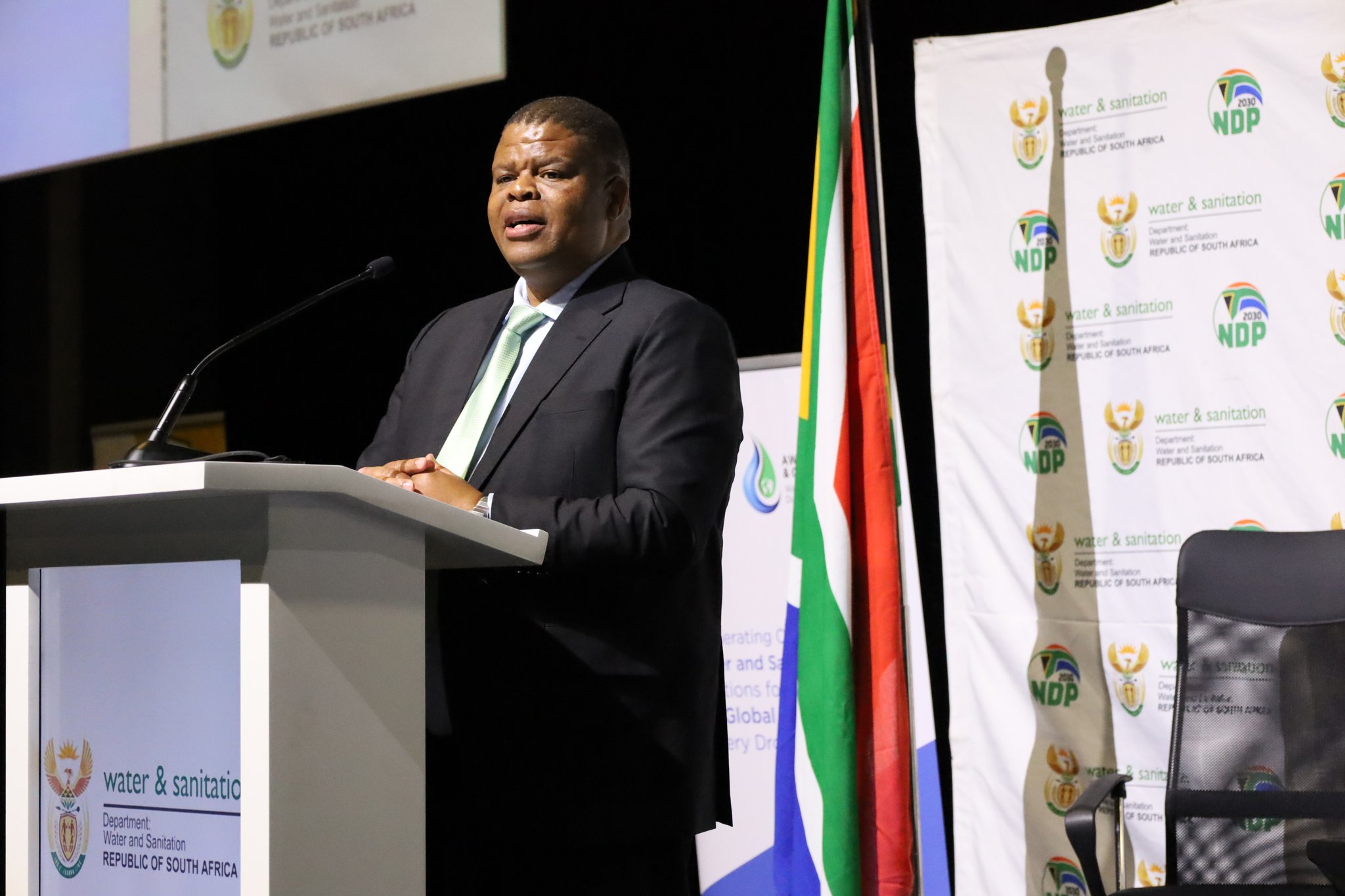

Water and Sanitation Deputy Minister David Mahlobo. Image: Supplied
David Mahlobo
1Min
South Africa
Government pushes major water sector reforms to strengthen infrastructure and regulation
South Africa is moving ahead with sweeping reforms in the water sector, including plans to establish an independent economic regulator and a national infrastructure agency, Deputy Minister David Mahlobo announced on Tuesday.

South Africa is moving ahead with sweeping reforms in the water sector, including plans to establish an independent economic regulator and a national infrastructure agency, Deputy Minister David Mahlobo announced on Tuesday.
Speaking at the Africa Water Supply and Sanitation Regulators Conference in Cape Town, Mahlobo said the reforms are aimed at improving water governance, strengthening infrastructure delivery and ensuring long-term sustainability in the sector.
The Deputy Minister said the reforms form part of broader government initiatives linked to the National Development Plan 2030, the National Infrastructure Plan 2050 and Operation Vulindlela, all aimed at improving institutional capacity and service delivery.
A key reform currently underway is the creation of an independent economic regulator for the water sector. According to Mahlobo, the regulator will improve oversight of tariffs, strengthen accountability and transparency, encourage evidence-based benchmarking and boost investor confidence.
He said the goal is not only to regulate prices, but to create a balanced and predictable system that protects consumers while ensuring financial sustainability for the maintenance and expansion of water infrastructure.
Mahlobo acknowledged that institutional reform remains a complex process requiring policy alignment, technical expertise and cooperation among stakeholders. He praised the Eastern and Southern Africa Water and Sanitation Regulators' Association for its role in supporting regulatory cooperation and capacity-building across the continent.
He said the organisation has helped develop professional and technical skills through training programmes, benchmarking systems and peer-learning initiatives, adding that South Africa has benefited from knowledge-sharing engagements with other African countries.
Another major reform highlighted by Mahlobo is the establishment of the National Water Resources Infrastructure Agency. The agency is expected to improve the country’s ability to finance, develop, operate and maintain strategic water infrastructure projects.
He stressed that investment in bulk water infrastructure, storage facilities, treatment plants, conveyance networks and maintenance programmes remains essential to achieving water security and expanding access to services.
Mahlobo also pointed to proposed amendments to the National Water Act and the Water Services Act, which are aimed at improving governance, strengthening accountability and ensuring fair water allocation.
The legislative changes will introduce operating licences for water service providers, a move Mahlobo described as a significant regulatory shift. He said the licences will ensure that institutions responsible for delivering water and sanitation services have the financial, technical and governance capacity to carry out their mandates effectively.
He added that the new system will strengthen enforcement measures by ensuring that ongoing non-compliance, maladministration and institutional failures are dealt with more decisively.