
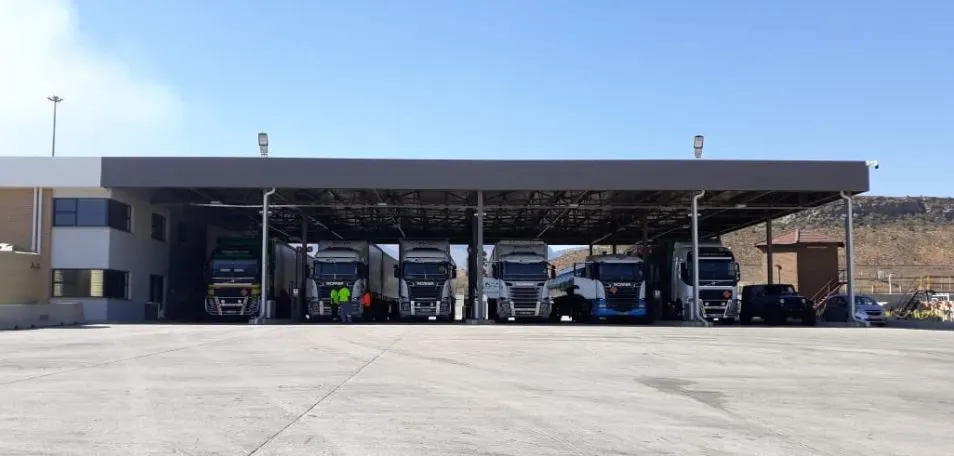

The association has called on the Department of Mineral and Petroleum Resources and National Treasury to develop a long-term strategy. Image: RFA
Department of Petroleum and Mineral Resources
1Min
South Africa
RFA welcomes diesel price cut but warns of ongoing fuel cost pressures
While lower diesel prices will bring some relief to freight operators, the Road Freight Association says rising petrol costs, higher levies and the phased withdrawal of fuel tax relief will continue to weigh on the transport sector and the wider economy.

The Road Freight Association (RFA) has welcomed the latest fuel price adjustments, particularly the significant reduction in diesel prices, but has cautioned that the overall impact on the transport industry remains mixed.
The changes, which took effect on Wednesday, 3 June 2026, saw diesel prices fall by about R3.25 per litre for 0.05% sulphur diesel and R2.62 per litre for 0.005% sulphur diesel. However, petrol prices increased by R1.43 per litre for both 93 and 95 octane grades.
The RFA said the diesel reduction offers some relief to long-haul freight operators, for whom fuel accounts for between 30% and 50% of operating costs. The association noted that transport companies have faced sustained fuel-related pressures in recent months, making the decrease a welcome development.
Despite this, the organisation warned that the increase in petrol prices will affect lighter commercial fleets, company vehicles and workers who rely on private transport to commute. Rising fuel costs for households could also reduce consumer spending and ultimately affect demand for freight services.
The RFA further highlighted that the benefits of lower diesel prices are being offset by policy-related costs. The slate levy, which is used to recover under-recoveries in the fuel pricing system, has risen by 35 cents per litre to R1.58 per litre. In addition, government has reduced diesel fuel levy relief to R1.96 per litre for June, with the remaining relief expected to be withdrawn entirely in July.
As a result, the association said the actual savings for operators are significantly lower than headline fuel price reductions suggest.
Beyond fuel costs, the RFA said the freight sector continues to face broader challenges, including deteriorating road infrastructure, increasing toll fees, skills shortages and exchange-rate volatility. These factors continue to place pressure on transport operators and the country's logistics network.
The association has called on the Department of Mineral and Petroleum Resources and National Treasury to develop a long-term strategy to address the growing slate deficit, manage the withdrawal of fuel levy relief responsibly and implement reforms aimed at reducing the industry's exposure to international fuel price fluctuations.
The RFA maintains that a stable and predictable fuel pricing system is essential for improving South Africa's logistics competitiveness and easing cost pressures on businesses and consumers alike.