



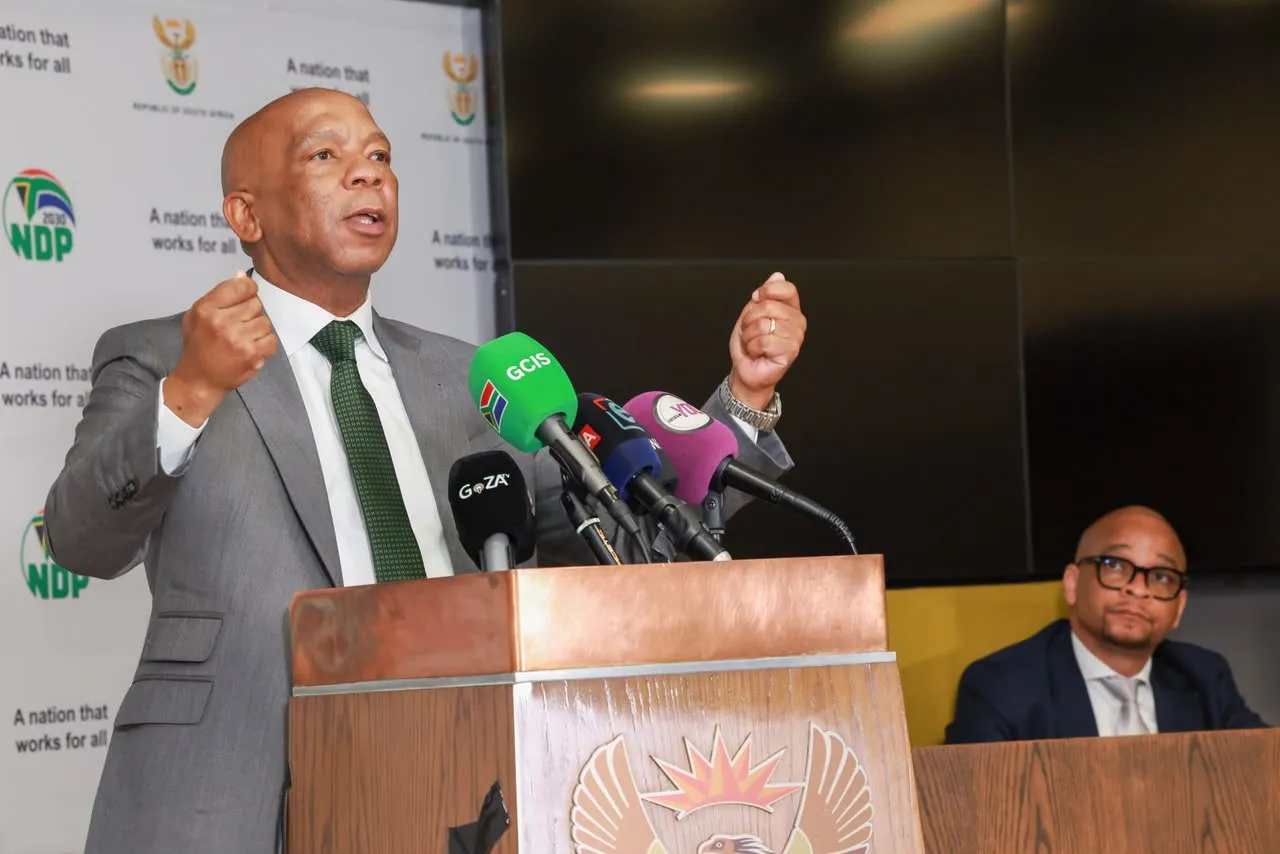

Electricity and Energy Minister Dr Kgosientsho Ramokgopa has confirmed that South Africa’s first section 34 determination under the Integrated Resource Plan 2025 (IRP 2025) will prioritise 4,600MW of battery energy storage systems (BESS) and 5,000MW of gas-to-power.
Electricity
1Min
South Africa
Ramokgopa prioritises battery storage and gas-to-power in new electricity plan
Electricity and Energy Minister Kgosientsho Ramokgopa says the first section 34 determination under the Integrated Resource Plan 2025 will prioritise 4,600MW of battery energy storage and 5,000MW of gas-to-power to reduce curtailment and strengthen reliable electricity supply.

Electricity and Energy Minister Dr Kgosientsho Ramokgopa has confirmed that South Africa’s first section 34 determination under the Integrated Resource Plan 2025 (IRP 2025) will prioritise 4,600MW of battery energy storage systems (BESS) and 5,000MW of gas-to-power.
The combined 9,600MW allocation is aimed at addressing the electricity system’s immediate need for energy storage, flexibility and dependable, dispatchable power.
The first determination will not include new wind or solar capacity.
According to the Department of Electricity and Energy, a subsequent determination will address additional wind and solar projects, including hybrid developments paired with energy storage, as well as longer-term pumped storage options.
Ramokgopa said the IRP 2025 should be viewed not only as an electricity planning framework but also as an infrastructure investment blueprint.
He said new investment must deliver electricity that the system can accommodate and supply when households and businesses need it, while keeping costs as low as possible.
The department said rising electricity curtailment was placing additional pressure on system costs.
Curtailment occurs when available electricity generation cannot be accommodated because of network constraints or operating conditions, including periods when supply exceeds demand.
This means electricity that could otherwise be supplied to consumers is left unused, while infrastructure and contractual costs remain.
The procurement approach will therefore first focus on making better use of electricity that is already available before additional variable generation is added through the next determination.
Batteries to reduce curtailment
Battery energy storage will be central to the government's approach.
The batteries will be able to charge using electricity that would otherwise be curtailed and discharge that electricity during evening peak periods or when demand increases.
The department said this would help convert surplus electricity into usable power while providing rapid balancing and grid-support services.
Storage projects will be located and operated in areas where they can access surplus electricity and discharge it without creating the same network constraints.
Procurement will be aligned with the requirements of the System Operator, with enforceable availability and performance obligations.
The department said the effectiveness of battery storage would be measured by the amount of electricity shifted into periods when it is needed and the reliability services provided to the grid.
South Africa already has a foundation for expanding battery storage.
By June 2025, all five projects in the first battery storage bid window, totalling 513MW, had reached commercial close and entered construction, attracting R15.4 billion in investment.
The proposed 4,600MW allocation would significantly expand the country's procurement of storage services.
5,000MW gas-to-power allocation
The proposed 5,000MW gas-to-power allocation will complement battery storage by providing dispatchable electricity when renewable generation declines or demand rises.
Unlike batteries, gas generation does not absorb surplus electricity. Instead, its role will be to operate flexibly, allowing renewable energy to meet demand when output is high and supplying the remaining electricity requirement when renewable generation falls.
The procurement design will consider factors including plant start-up times, ramping capability and minimum operating levels.
The department said fuel availability, delivered gas prices, port and pipeline infrastructure, grid connections and commissioning schedules would also need to be assessed together.
The affordability of gas-to-power projects will be evaluated against their expected operating profiles.
The battery storage and gas procurement programmes will form part of a broader strategy involving transmission expansion, new industrial electricity demand and regional electricity trade.
While battery storage can help reduce curtailment, the department said sustained progress would also depend on delivering the grid infrastructure needed to transport electricity to consumers.
The procurement programme is also expected to support local manufacturing, engineering, construction, skills development and broader ownership of energy infrastructure through measurable commitments.
“This approach advances the seventh administration’s priorities by improving the use of available electricity, supporting dependable supply for industrial production and employment, and addressing avoidable costs that place pressure on electricity affordability,” Ramokgopa said.