
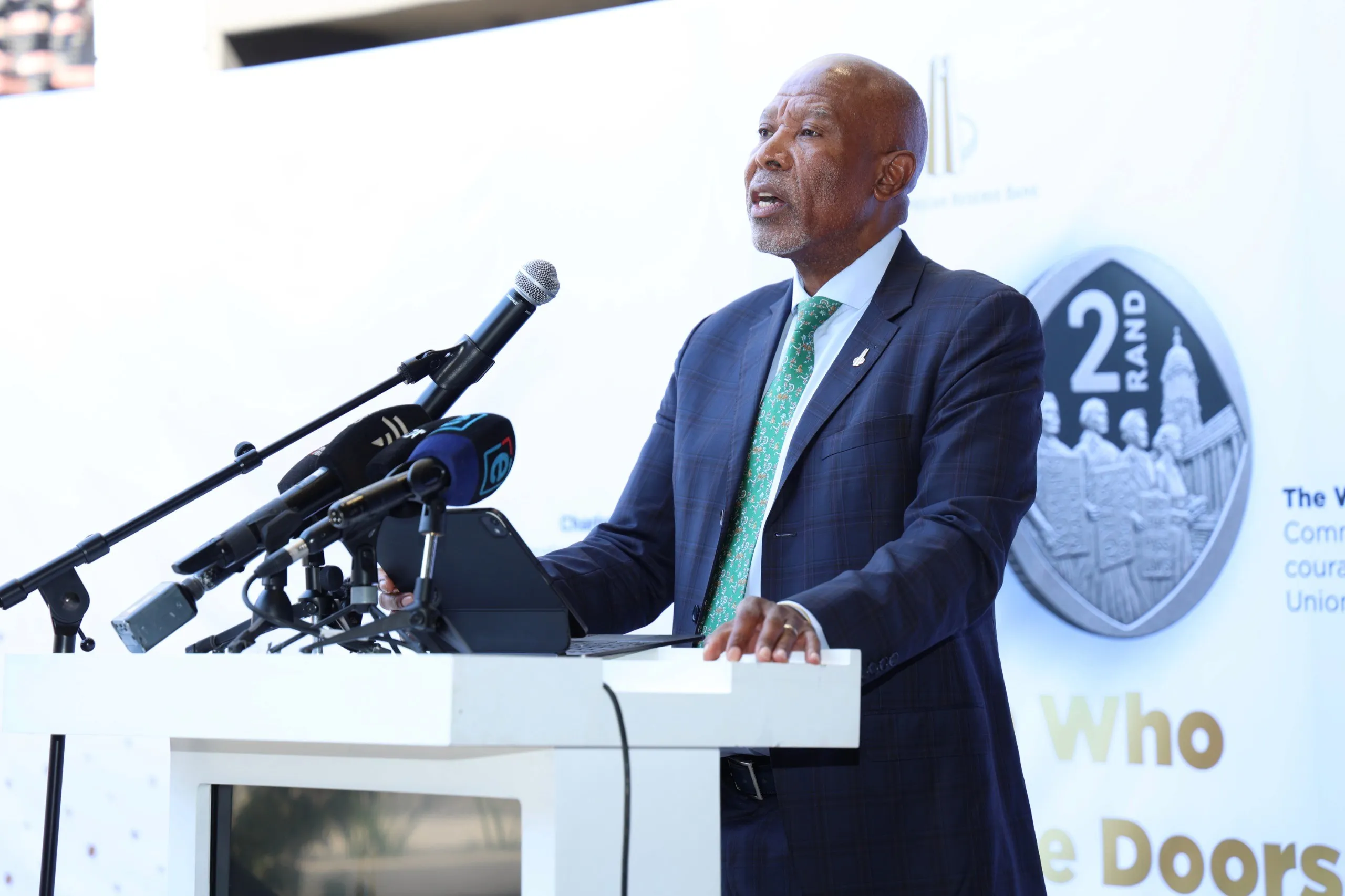

The South African Reserve Bank has introduced two commemorative R2 circulation coins celebrating Charlotte Maxeke’s historic academic achievement. Image: SARB
Charlotte Maxeke
1Min
South Africa
SARB launches new R2 coins honouring Charlotte Maxeke and 1956 women’s march
The South African Reserve Bank has introduced two commemorative R2 circulation coins celebrating Charlotte Maxeke’s historic academic achievement and the courageous women who marched against apartheid pass laws in 1956.

The South African Reserve Bank (SARB) has launched two new commemorative R2 circulation coins honouring significant milestones in the history of women’s struggle and achievements in South Africa.
The coins pay tribute to Charlotte Maxeke, who became the first black South African woman to obtain a university degree 125 years ago, and the more than 20,000 women who took part in the historic 1956 Women’s March against apartheid pass laws.
The launch forms part of the Milestones of Freedom programme, which was introduced by President Cyril Ramaphosa in June 2026.
One of the new coins features Charlotte Maxeke, recognising her pioneering contribution and remarkable academic achievement at a time when opportunities for black women were severely limited.
The second coin commemorates 70 years since thousands of women marched to the Union Buildings on August 9, 1956, in protest against the extension of pass laws to women.
Reserve Bank Governor Lesetja Kganyago said the commemorative coins were intended to honour extraordinary women whose contributions helped shape South Africa's history.
He said the launch should also serve as an inspiration to young women to pursue leadership and achievement.
Kganyago, however, reminded the public that despite their historical significance and unique designs, the coins remain ordinary legal tender.
He encouraged South Africans not to keep the coins hidden away as collector's items, but rather to allow them to circulate and carry their stories from one person to another.
Chairperson of the Charlotte Mannya Maxeke Institute, Thulasizwe Makhanya, said Maxeke's legacy should encourage South Africans to reflect on the challenges still confronting society.
He said her courage and determination should prompt questions about how she might have responded to present-day issues such as gender-based violence, inequality, unequal pay and the performance of public institutions.
Meanwhile, Executive Director of the Puku Children's Literature Foundation, Elinor Sisulu, highlighted citizenship and inclusion as central themes of the 1956 Women's March.
She said the women who marched played an important role in advancing the struggle for full citizenship and rights for black South Africans, adding that the principles they fought for should continue to guide the country.
The two coins are expected to enter general circulation, allowing South Africans to encounter reminders of the country's history and the women whose courage helped shape its democratic journey in their everyday transactions.