

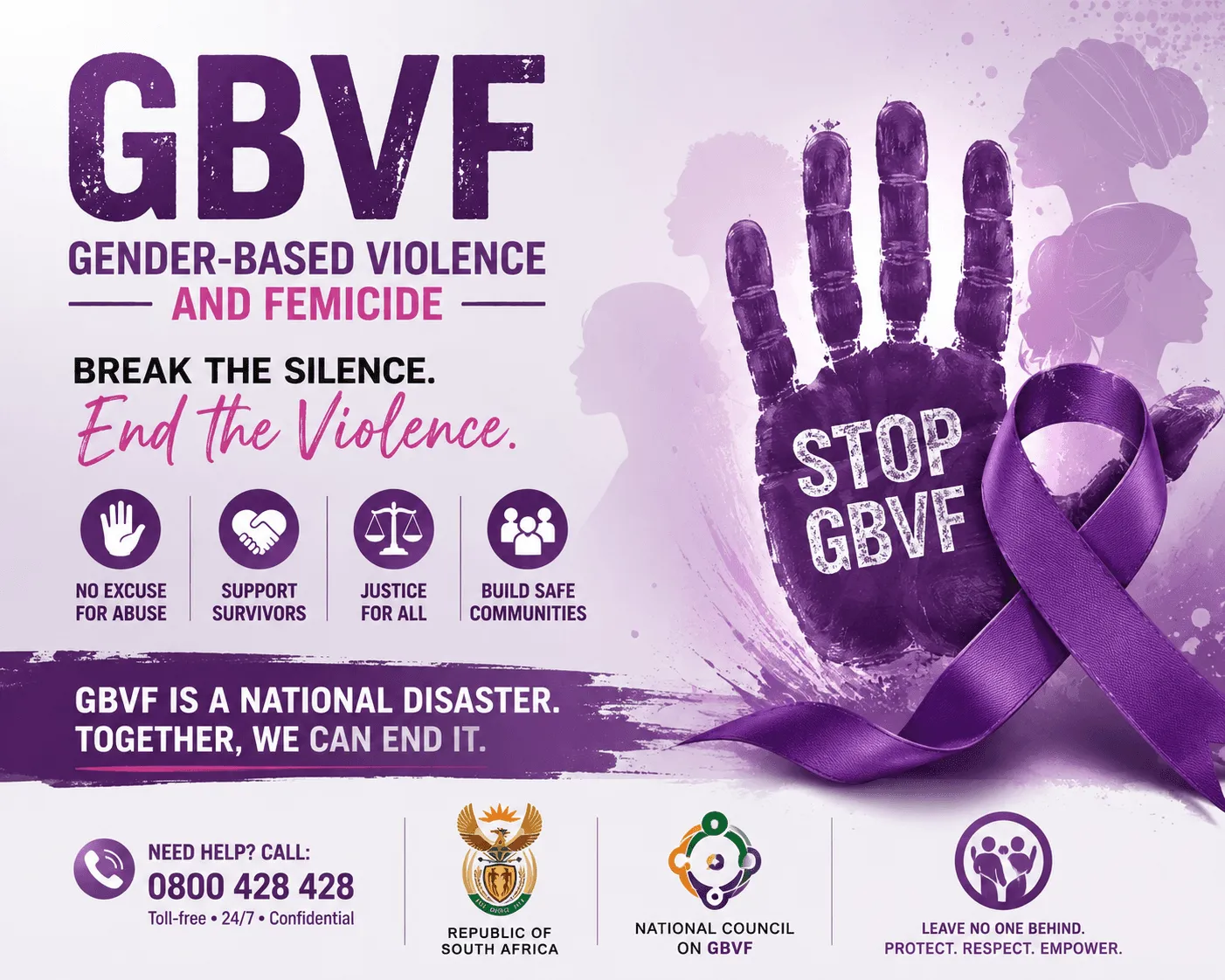
President Cyril Ramaphosa has appointed a new National Council on Gender-Based Violence and Femicide for a three-year term. Image: AI generated.
GBV
1Min
South Africa
Ramaphosa appoints new National Council on GBVF to spearhead fight against violence
President Cyril Ramaphosa has appointed a new National Council on Gender-Based Violence and Femicide for a three-year term, tasking the body with driving South Africa's response to the country's GBVF crisis and strengthening support for survivors.

President Cyril Ramaphosa has announced the appointment of members to the National Council on Gender-Based Violence and Femicide (NCGBVF), with the new council set to serve a three-year term from August 1, 2026, to July 31, 2029.
The appointments were made in terms of the National Council on Gender Based Violence Act, 2024 (Act No. 9 of 2024), which establishes the council as a statutory body responsible for providing strategic leadership in the fight against gender-based violence and femicide (GBVF).
The council is mandated to coordinate a multi-sectoral and inter-sectoral approach to implementing South Africa's national strategy on GBVF across national, provincial and local government, while also working with communities and other stakeholders.
The newly appointed members are Dr Ramalepe Lebogang Mathibe, Keitumetse Fatimata Moutloatse, Caroline Peters, Dr Zubeda Dangor, Vuyisiwe Numalo, Anele Siswana and TWM Limema.
In addition, Ramaphosa has designated Dr Ramalepe L. Mathibe as chairperson of the council, while Welheminah R. "Shoki" Tshabalala will serve as deputy chairperson.
The appointments coincide with the start of Women's Month, with the President expressing confidence that the council will intensify efforts to combat GBVF, which has been classified as a national disaster.
Ramaphosa said he expects the council to lead initiatives aimed at challenging harmful social norms and practices, promoting women's economic empowerment, strengthening the criminal justice response and expanding survivor-centred support services.
The council's work is expected to play a central role in coordinating government and civil society efforts to reduce gender-based violence and femicide, one of South Africa's most pressing social challenges.