

GNU
1Min
South Africa
Public mood fragile despite GNU governance, says SARB
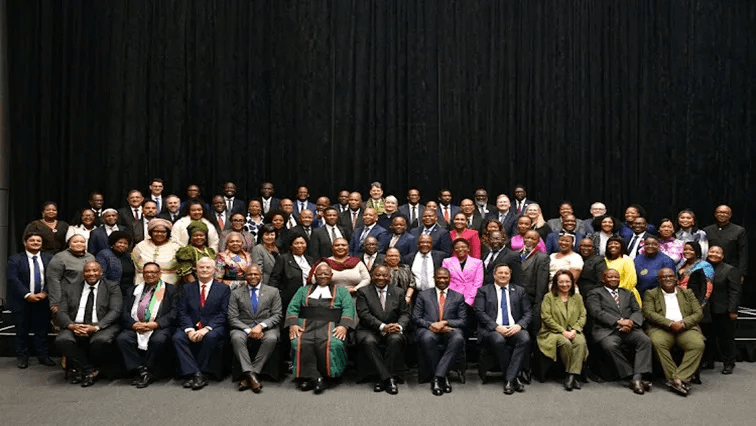
A year into South Africa’s Government of National Unity, public trust in political leaders and institutions remains extremely low, though citizens show moderate support for key government policies. The 2025 IJR Reconciliation Barometer highlights widespread economic hardship, low social cohesion, and cautious optimism for government-led reforms.

South Africans remain deeply sceptical of political leaders and institutions despite the relatively smooth transition to multi-party coalition governance, according to the 2025 South African Reconciliation Barometer (SARB) released on Wednesday by the Institute for Justice and Reconciliation (IJR).
The annual survey, the country’s longest-running public opinion study on reconciliation, trust, social cohesion and national identity, is based on 2,006 nationally representative interviews conducted one year into the Government of National Unity (GNU). The findings depict a nation marked by democratic resilience but a fragile public mood, with trust in leadership remaining extremely low.
Only a third of South Africans expressed confidence in the GNU’s effectiveness, while distrust in political parties ranged from 50% to 54% across the four largest parties. Nearly eight in ten respondents said they believed national leaders were untrustworthy and indifferent to ordinary citizens—a figure largely unchanged since the last survey in 2023.
Despite this scepticism toward political figures, the survey found that public support for the GNU’s policies and legislative agenda was notably higher. Majority approval was recorded for initiatives such as the National Health Insurance (61%), the National Dialogue (53%), and the Expropriation Act (46%). Analysts say this suggests that while citizens may doubt leaders, they remain open to government programmes aimed at social and economic reform.
Economic challenges remain a central concern for South Africans. Over half of respondents (54%) reported often going without a cash income in the past year, while one in four frequently faced food insecurity. Poverty and inequality were identified as the greatest barriers to reconciliation and the areas with the least progress since 1994, highlighting the ongoing economic pressures faced by households.
Social cohesion indicators painted a mixed picture. While national identity remains strong, interpersonal trust—especially across racial and linguistic lines—remains low. Key socio-political issues also reflected divided public opinion: 58% supported additional resources for investigating unsolved apartheid-era crimes; over half felt that Broad-Based Black Economic Empowerment (B-BBEE) should be phased out; only 41% of those aware of the Israel–Palestine conflict supported South Africa’s position at the International Court of Justice, and 47% disapproved of Afrikaner asylum claims in the United States.
Looking ahead, the Barometer highlighted risks for the 2026/27 local government elections. Confidence in local authorities was extremely low at 26%, and public optimism about the future remained limited, with many South Africans unconvinced that the country’s situation has improved substantially since 1994.
The IJR concluded that while South Africa faces significant challenges in rebuilding public trust, there remains an opportunity for the GNU to strengthen accountability, deliver on commitments, and foster responsive institutions that can rebuild confidence in both national and local governance.