



Fikile Mbalula
1Min
South Africa
ANC intensifies efforts against illegal miners as community fears rise
The ANC has intensified its campaign against illegal miners as communities face unprecedented unrest. This stance by the co-governing party comes amid calls for comprehensive reforms.

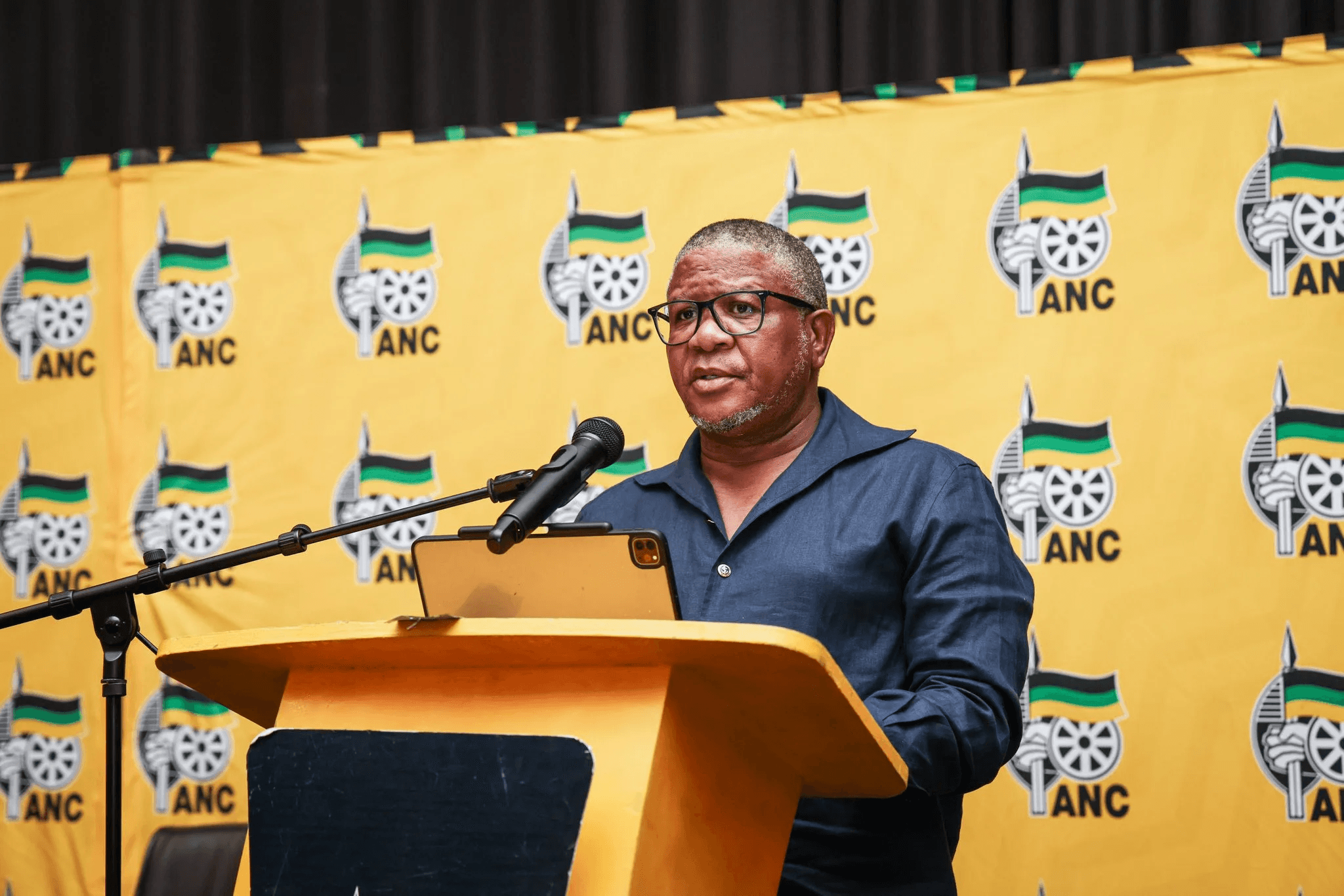
The African National Congress (ANC) Secretary General, Fikile Mbalula, has announced that the party’s National Executive Committee (NEC) is committed to intensifying efforts against the activities of illegal miners, particularly in areas such as Sporong and Bapong.
The dangers posed by these underground miners have stirred significant unrest, necessitating intervention from police and other governmental entities.
The situation reached a critical point when just last week, ongoing violence in Sporong necessitated urgent action from Acting Police Minister Firoz Cachalia, Gauteng Premier Panyaza Lesufi, and National Police Commissioner General Fannie Masemola. This leadership trio declared a permanent engagement of law enforcement agencies in response to the ongoing crimes and threats from illegal miners that have terrorised local communities.
This alarming trend has forced over 600 residents from Sporong to find refuge in the Randgate Community Centre, fleeing the violence and upheaval brought upon by these mining operations that have run rampant this year.
Echoing the alarming dynamics in these areas, Mbalula stated that the NEC has resolved to ramp up a coordinated crackdown on illegal mining activities, commonly referred to as zama-zama operations. He underlined the significant consequences of such activities, which not only endanger lives but also undermine the rule of law and destroy vital community infrastructure.
In light of these developments, the ANC's strategy was recently revamped during the NEK Lekgotla, where Mbalula laid out a broadened programme of action focused on local governance reforms, economic revitalisation, and essential infrastructure investments.
A vital aspect of this undertaking is the introduction of the Service Delivery Acceleration Framework (SDAF) linked with the District Development Model (DDM), an initiative aimed at ensuring coherence across the layers of government in planning and budgeting.
Despite economic turbulence, the ANC continues to advocate for industrialisation and improvements in service delivery, in line with the comprehensive SDAF. "We remain steadfast in our aim to combat the issues related to service delivery," Mbalula asserted, highlighting that improved governance directly influences the perception and experience of the state by communities.
Recent successes in energy reforms, notably in combating load shedding, have been a hallmark of the ANC’s achievements, according to Mbalula. The government's Energy Action Plan has provided sustained improvements, and significant funding—over R1 trillion—has been allocated for public infrastructure through the current Medium-Term Expenditure Framework.
The shift towards a consolidated economic strategy includes a focus on localisation and industrialisation, which Mbalula sees as integral to the country's economic foundation. This broader strategy encompasses master plans across critical industries, such as automotive and steel, aiming to bolster local manufacturing, job creation, and sustainable growth.
As Mbalula addressed the outcomes from the lekgotla, he remarked, “Economic transformation, industrialisation, and job creation centralise our efforts to restore dignity and create shared prosperity.”
He further noted that while macro-economic stabilisation has offered a foundation, translating this into inclusive growth remains a pressing responsibility for the incumbents in leadership.