
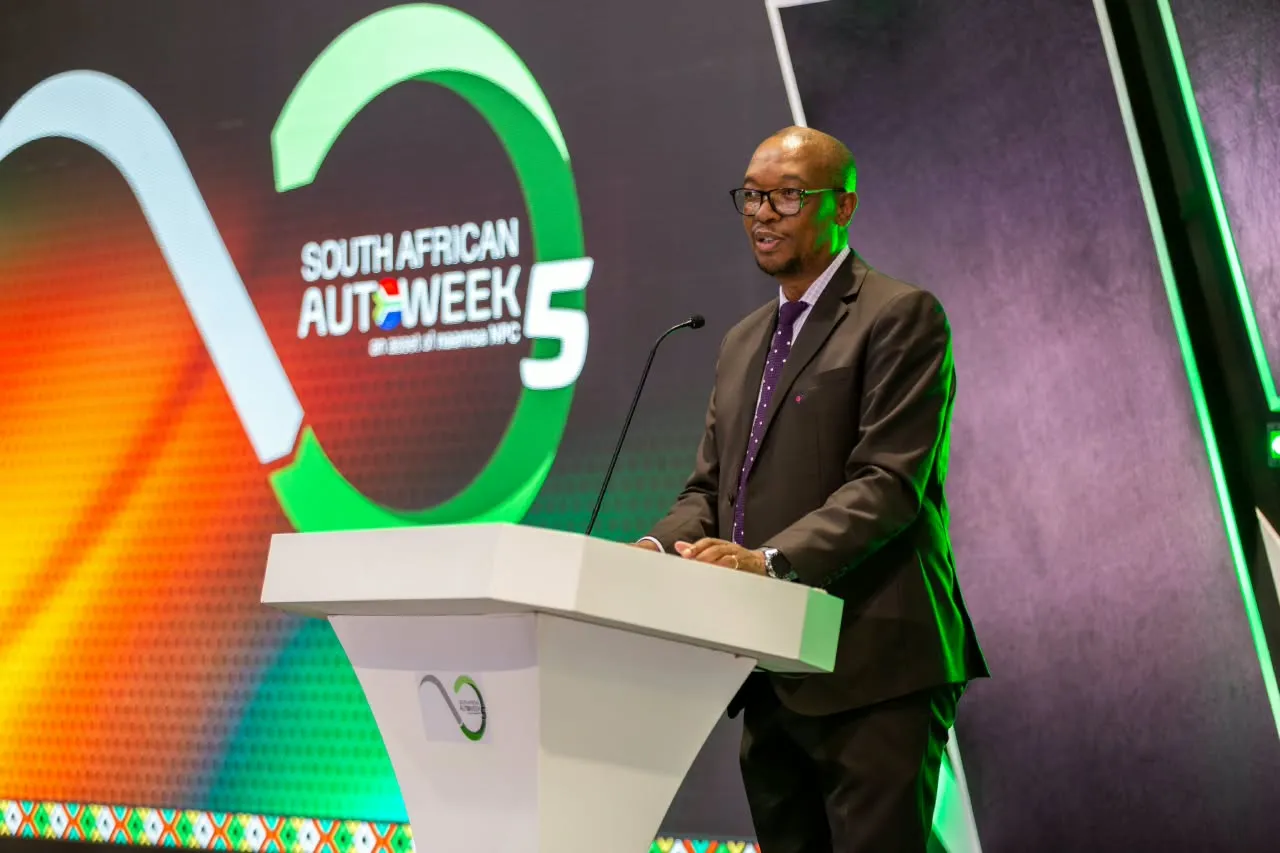

Trade, Industry and Competition Minister Parks Tau says transformation, localisation and the shift to new energy vehicles are key to growing South Africa’s automotive industry, creating jobs and supporting local manufacturers. Image: Supplied.
South Africa
1Min
South Africa
Minister Tau calls for transformation and local manufacturing to grow SA’s automative sector
Trade, Industry and Competition Minister Parks Tau says transformation, localisation and the shift to new energy vehicles are key to growing South Africa’s automotive industry, creating jobs and supporting local manufacturers.

Trade, Industry and Competition Minister Parks Tau has reaffirmed government’s commitment to transforming South Africa’s automotive sector, strengthening local manufacturing and supporting the transition to new energy vehicles.
Speaking at the opening of South African Auto Week at the International Convention Centre in Durban on Tuesday, Tau said transformation and competitiveness should work together to strengthen the industry.
The three-day event, led by Naams, The Automotive Business Council in partnership with the KwaZulu-Natal government and the Department of Trade, Industry and Competition (dtic), brings together industry leaders and government policymakers to discuss regulations, local manufacturing and challenges facing the sector.
Tau said increasing local production of vehicle components could create opportunities for new suppliers, attract investment and generate employment.
“Every imported component that we learn to make here is an opportunity for a new supplier, a new investment and new jobs,” he said.
He added that government was developing measures to ensure businesses owned by historically disadvantaged people participate in the sector’s transformation, particularly as the industry shifts towards new energy vehicles.
Tau said emerging value chains in battery production, electric drive units, power electronics, thermal systems and charging equipment presented opportunities for black-owned and women-owned businesses to enter the market as owners and partners.
The minister also highlighted the ongoing review of the Automotive Production and Development Programme 2 (APDP2), saying the programme should prioritise local manufacturing rather than assembly alone and provide support for component manufacturers.
He noted that a 150% investment allowance applies to qualifying investments in electric and hydrogen vehicle production.
Government will continue supporting investment in the automotive supply chain through the Automotive Investment Scheme, the Industrial Development Corporation, the National Empowerment Fund and other development finance institutions, he said.
However, Tau acknowledged that the industry continued to face challenges, including pressure from imports, high energy and logistics costs, and weaker demand.
He said some component manufacturers had been forced to close, adding that transformation efforts must also focus on keeping existing businesses operational.
To expand market opportunities, government is pursuing the Africa Automotive Pact through the Association for African Automotive Manufacturers and partners in Egypt and Algeria.
Tau said the initiative would support the African Continental Free Trade Area (AfCFTA) and help diversify markets for the country’s automotive industry.
South African Auto Week continues over three days in Durban, providing a platform for discussions on the future of the automotive sector and opportunities to strengthen local production and investment.