


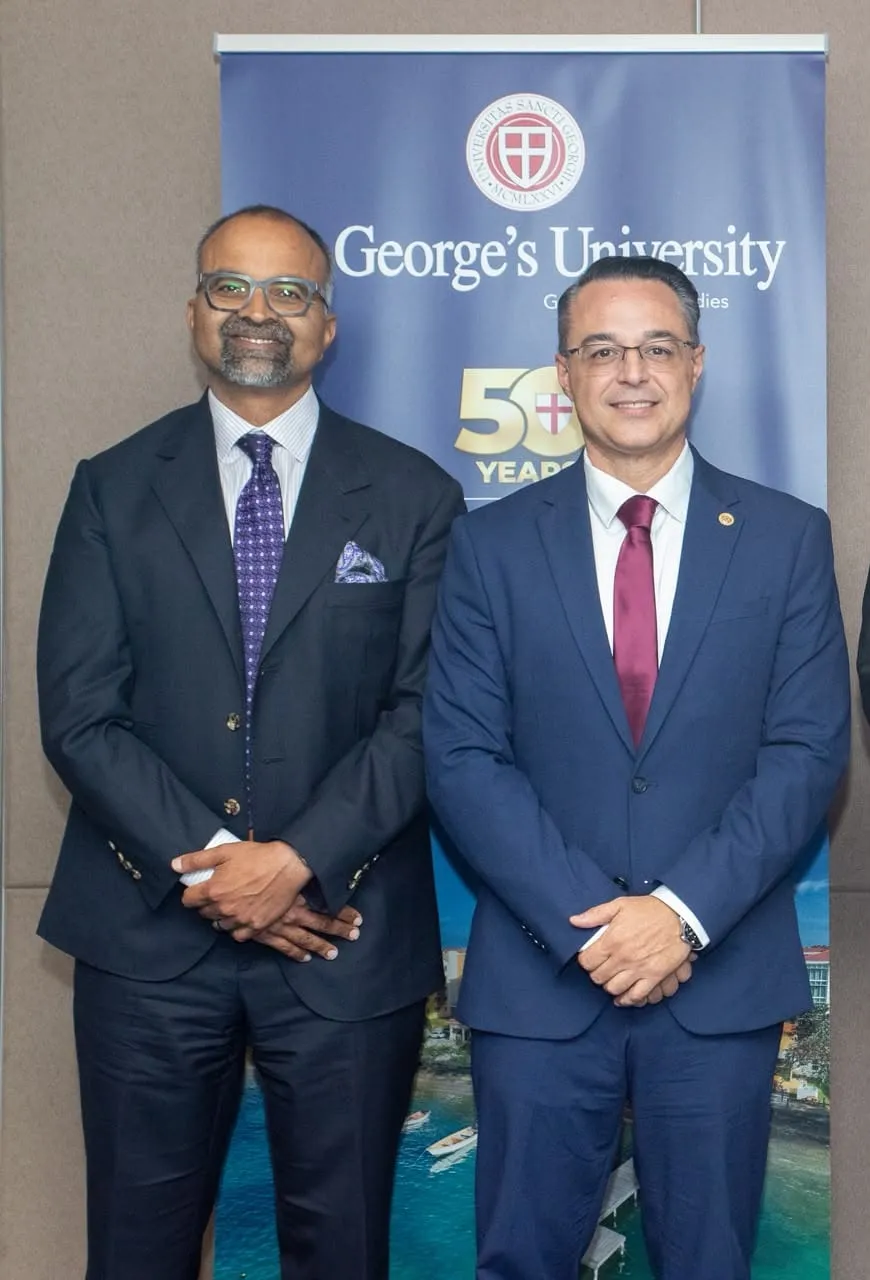

SGU President and Dean of the School of Medicine, Dr Marios Loukas, said the institution's objective is to provide students with an education that allows them to practise in different healthcare systems while supporting those who wish to return to their home countries.
Health
1Min
South Africa
International medical training offers alternative route for aspiring South African doctors
International medical education providers say training South African students abroad could help expand the country’s pool of doctors, rather than worsen the shortage, by creating additional pathways for students unable to secure limited places at local medical schools.

International medical education providers are challenging the perception that training South African students abroad contributes to the country’s doctor shortage, arguing that overseas institutions can provide an additional pathway for aspiring doctors while creating opportunities for graduates to return home and practise.
Dr Gaurov Dayal, Chief Executive Officer of Medforth Global Healthcare Education, said institutions such as St George’s University (SGU) should be viewed as complementing South Africa’s medical education system rather than competing with it.
“We are actually contributing the number of students to the South African system because they are not using any South African resources in being trained to become physicians,” Dayal said.
He said every doctor who eventually returns to South Africa after being trained abroad represents an addition to the country’s medical workforce.
South Africa has more than 60 million people but only about 45,000 registered medical practitioners, according to figures cited by Dayal.
He also pointed to the limited number of places available at South African medical schools, saying fewer than 5% of students who apply are accepted.
“I am certain that the remainder, 95 percent, are not all unqualified,” he said.
According to Dayal, international medical schools can provide an alternative for capable students who meet the necessary requirements but are unable to secure one of the limited local places.
SGU President and Dean of the School of Medicine, Dr Marios Loukas, said the institution's objective is to provide students with an education that allows them to practise in different healthcare systems while supporting those who wish to return to their home countries.
“Our goal and our mission are to make sure that our students go back to their countries and practise medicine and help improve the population's health in their native lands,” Dayal said.
The issue comes against the backdrop of South Africa's longstanding concerns about the migration of healthcare professionals to countries offering different working conditions and remuneration.
Loukas acknowledged that the global movement of doctors is a genuine concern but argued that the international education model should be distinguished from situations where South Africa trains doctors domestically before they leave the country.
“I think the important thing here is not so much that South Africa is losing doctors. It's that we, as an institution, we're providing the right education,” Loukas said.
Dayal described the model as “brain addition” rather than “brain drain”, arguing that international institutions are providing the resources for students' medical education instead of South Africa investing in their training before they potentially leave.
“In our case, we are providing the resources for the training in an international environment. And many of those students are actually going back to South Africa,” he said.
A key development for South African students was SGU's recognition by the Health Professions Council of South Africa (HPCSA) in 2025.
The recognition provides graduates with a defined route towards returning to South Africa and registering to practise, although recognition does not automatically mean that every graduate can begin practising immediately.
Graduates may still have to complete credential verification and meet examination or other registration requirements before being allowed to practise in the country.
Dayal urged prospective students and their families to investigate the accreditation and registration requirements of any overseas medical school before enrolling.
“The worst-case scenario would be for a student to go to a school abroad, but then not be able to have a pathway to return home,” he said.
SGU also offers scholarships, although the institution acknowledges that these do not necessarily cover the full cost of tuition, accommodation and living expenses.
The international education model therefore offers one potential route for South Africans who want to pursue medicine but cannot access limited local university places. At the same time, the broader challenge remains increasing domestic medical training capacity so that more aspiring doctors can be educated within South Africa.