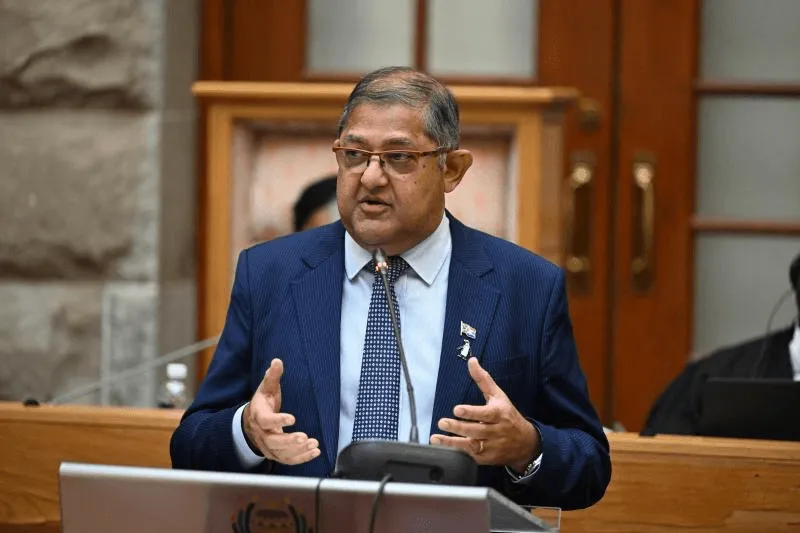

Deputy Minister of Forestry, Fisheries and the Environment Narend Singh has called for stronger cooperation between government and traditional health practitioners. Image: Supplied.
SANBI
1Min
South Africa
Government urged to work with traditional healers to protect medicinal plants
Deputy Environment Minister Narend Singh has called for closer cooperation between government and traditional healers to cultivate medicinal plants and protect endangered species, with 154 commonly used medicinal plant species at risk of extinction due to overharvesting.

Deputy Minister of Forestry, Fisheries and the Environment Narend Singh has called for stronger cooperation between government and traditional health practitioners to protect medicinal plants and reduce pressure on species threatened by overharvesting.
Speaking at the India–South Africa Traditional Medicines Symposium and Exhibition in Durban on Saturday, Singh said the South African National Biodiversity Institute (SANBI) estimates that 2,062 indigenous plant species are used in traditional medicine.
He said these plants account for approximately one in every 10 plant species in South Africa and support more than 200,000 traditional health practitioners.
However, growing demand, drought, climate change, poverty and illegal trade are placing increasing pressure on medicinal plants collected from the wild.
According to Singh, the 2024 Red List of endangered plants identifies 154 commonly used medicinal plant species that face the risk of extinction due to overuse.
“If the plant goes, the medicine goes with it. You cannot keep a tradition alive in a storeroom. If we want traditional medicine to have a future, the plants have to have a future too,” he said.
Singh said the sector needed to shift towards cultivating medicinal plants rather than relying heavily on wild harvesting. He also stressed the importance of restoring harvested plants and managing their genetic resources responsibly.
He said SANBI was working with traditional health practitioners, traditional leaders, communities and provincial conservation authorities to identify threatened species, support cultivation and protect plants in their natural habitats.
The Deputy Minister added that protecting biodiversity also involved ensuring that benefits arising from the use of genetic resources, including digital DNA sequence information, were shared fairly and equitably with South Africans.
As part of efforts to put the approach into practice, SANBI has proposed a project to propagate scarce medicinal plants, provide training and restore communal land.
Singh said traditional healers had identified 15 medicinal plant species that were becoming increasingly difficult to find in the wild.
The proposal aims to multiply these plants on a larger scale and provide planting material, known as mother stock, and horticultural training to 1,800 traditional healers and community members, at least half of whom would be women.
It also proposes restoring 1,800 hectares of degraded communal land in Limpopo, North West and the Eastern Cape, as well as mapping culturally significant sites across the three provinces.
Singh said the initiative aimed to protect threatened plant species while ensuring that traditional healers could continue accessing the plants needed by their patients.
He added that sustainable cultivation could also create income-generating opportunities for rural households without depleting natural resources.
The Deputy Minister called for investment in nurseries, stronger partnerships with communities and the development of value chains that ensure local people benefit from the trade in medicinal plants.
He also emphasised the need to document traditional knowledge with the consent of its holders and to create more opportunities for young people and women in the sector.