



Benin
Benin government says Coup attempt foiled after soldiers temporarily seized State TV
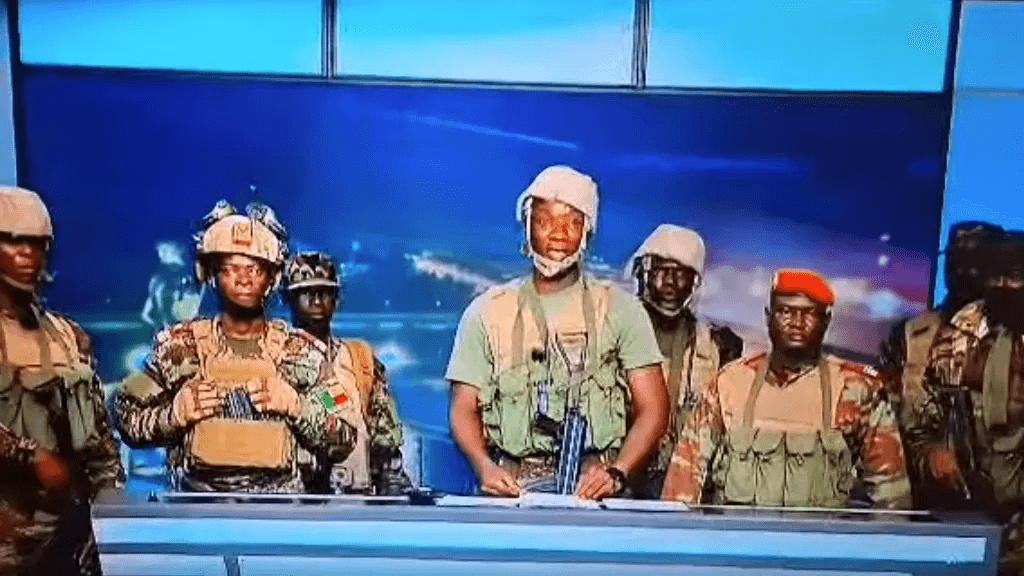
A group of soldiers briefly announced on state television that they had toppled the government. Within hours, loyalist forces regained control, arrested several mutineers and restored order. The government confirmed the coup attempt was thwarted as President Patrice Talon remained safe and the constitution stands.
Chaos struck Benin early on Sunday after a group of soldiers appeared on national television claiming they had overthrown the government and removed President Patrice Talon from office. The group, calling itself the “Military Committee for Refoundation,” announced the dissolution of government institutions, suspension of the constitution and closure of all borders.
Gunfire was reported near the presidential residence and the national broadcaster, prompting fear and uncertainty across the capital. The signal to state television and radio was cut briefly — but the broadcast coup claim was followed by swift action from loyalist security forces.
Within hours the government declared that order had been restored. Interior Minister Alassane Seidou announced that the armed forces had foiled the mutiny, and normalcy was returning. The regular army and national guard reportedly regained control of key installations with minimal resistance.
President Talon later addressed the nation, confirming his safety and vowing that those responsible would face justice. He described the coup plot as a “treacherous attempt” and reiterated the government’s commitment to stability and constitutional order.
At least 14 suspects, mostly active-duty soldiers, are reported to have been arrested so far, as security forces continue investigations into the attempted takeover.
Regional and international actors, including members of the regional bloc overseeing West Africa’s stability, have condemned the attempt as a threat to democratic governance.
For now Benin appears to have avoided the fate of several neighbouring states recently destabilised by military coups. But the drama underscores simmering tensions within the country, including discontent over security failures and concerns about political developments, as the nation approaches a scheduled presidential election in April 2026.