


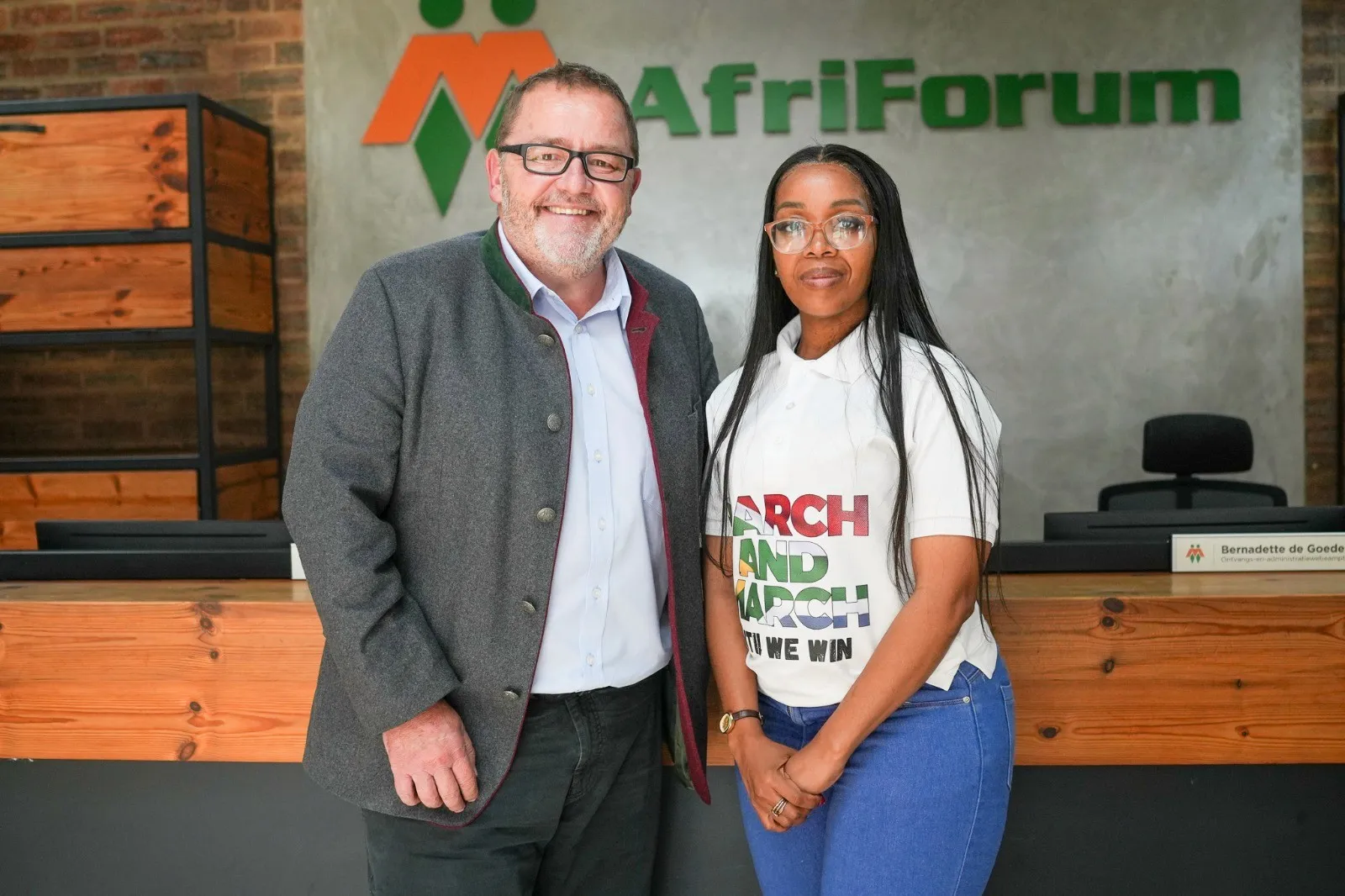

March and March founder Jacinta Ngobese-Zuma and AfriForum CEO Kallie Kriel. Image: Supplied.
March and March
1Min
South Africa
AfriForum, March and March form working group to tackle community challenges
Civil rights organisation AfriForum and March and March have agreed to work together on issues including community safety, education, skills development and the rule of law.

AfriForum and community organisation March and March have agreed to establish a collaborative working group aimed at addressing challenges affecting communities at grassroots level.
The organisations met on Tuesday, 18 August 2026, during a visit by March and March to AfriForum. The meeting was attended by March and March founder Jacinta Ngobese-Zuma, AfriForum CEO Kallie Kriel and other representatives from the two organisations.
Discussions focused on areas of mutual interest, including community organisation, socio-economic development, mother-tongue education, access to quality education and promoting peaceful coexistence.
The organisations also agreed to explore joint legal action on matters of mutual interest and support each other on issues concerning the rule of law and crime prevention, including concerns around illegal migration.
Ngobese-Zuma said March and March supported efforts to build a united South Africa based on ubuntu, respect for cultural and religious beliefs, human rights and the rule of law.
She said education remained a cornerstone of the country's development, while communities should be empowered to work together to hold government accountable.
“The Movement believes that unsecured borders have serious consequences for the ailing economy,” Ngobese-Zuma said, raising concerns about illicit trade, crime, corruption and what she described as government ineffectiveness.
She said community-based organisations should work together to address lawlessness and improve safety, while acknowledging that the two organisations could differ on certain issues.
Kriel said AfriForum was prepared to cooperate with organisations where there were shared interests, despite differences on other matters.
He said AfriForum would share its experience of building the organisation over the past two decades with March and March as it develops its grassroots structure.
“Differences on specific matters” should not prevent organisations from working together where cooperation could benefit communities and children, Kriel said.
The meeting also examined concerns over border control, crime prevention and shortcomings in the public education system.
The organisations discussed possible solutions that communities could implement within the law, including community safety initiatives, agricultural development, heritage preservation, education, training and skills development.
AfriForum’s head of intercultural relations and cooperation, Barend Uys, said the organisation sought to build relationships with communities and organisations based on mutual recognition and respect.
He said grassroots cooperation was important in promoting peaceful coexistence and empowering communities to take responsibility for their future.
Uys said AfriForum had already established cooperation agreements with several traditional and community organisations, including the AmaBhele KaJamangile, Barolong Boo Seleka, Batlharo Boo Tokwana Ba Ga Masibi, Batlokoa Ba Mota, Batlharo Ba Ga Motlware, Vulamehlo Kusile Organisation and Royal Leaders of South Africa.
Kriel also criticised what he described as government policy failures contributing to challenges facing communities, including illegal migration and economic difficulties in the region.
He said communities would need to hold governments accountable while also taking responsibility for building the future they wanted.
Both organisations stressed that their efforts would be pursued peacefully and within the law, with violence and intimidation having no place in their work.