



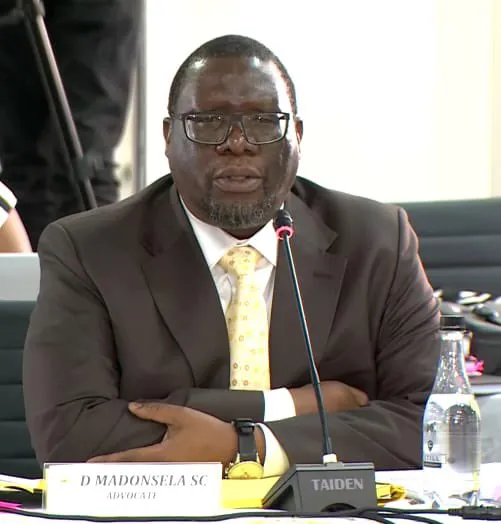

Ramaphosa made submissions opposing Madonsela’s recommended appointment. Image: File
Cyril Ramaphosa
1Min
South Africa
Ramaphosa objects to Madonsela’s appointment as Chief evidence leader
President Cyril Ramaphosa has raised objections to the proposed appointment of Advocate Thandazani Madonsela SC as Chief Evidence Leader of the National Assembly’s Impeachment Committee, citing potential conflicts of interest linked to his previous dealings with the President and the ANC.

President Cyril Ramaphosa has raised concerns over the recommendation of Advocate Thandazani Madonsela SC as the Chief Evidence Leader of the National Assembly’s Impeachment Committee.
In a letter dated 18 August 2026 addressed to the Chairperson and Secretary of Parliament, Ramaphosa made submissions opposing Madonsela’s recommended appointment.
The President said his concerns relate to potential conflicts of interest that could arise from Madonsela’s previous dealings with him and his involvement in matters connected to the impeachment inquiry.
One of the concerns raised by Ramaphosa relates to the 2022 interviews for the appointment of the Chief Justice. He said Madonsela was removed as his nominee to the Judicial Service Commission (JSC) during that process.
Ramaphosa said there was therefore a reasonable apprehension that Madonsela could harbour a sense of grievance towards him and potentially act on it.
The President also raised concerns about Madonsela’s previous legal involvement with the African National Congress (ANC).
According to Ramaphosa, ANC Secretary-General Fikile Mbalula explained on 7 August that ANC representatives on the Impeachment Committee had abstained from voting on Madonsela’s recommendation because Madonsela had recently provided legal advice to the ANC on matters relating to the current impeachment inquiry.
Ramaphosa said he was not aware of the full nature or extent of the information provided by Madonsela to the ANC, or the legal advice he gave the party.
However, he argued that the circumstances raised concerns about whether Madonsela could objectively perform his role as Chief Evidence Leader.
The President pointed to the general principle that a legal practitioner should not act in a matter substantially similar to one in which they previously represented or advised a party, particularly where confidential or privileged information may have been obtained.
Ramaphosa further argued that a person should not assume a decision-making or adjudicative role in proceedings concerning a matter in which they previously acted for or advised a party who could be directly or indirectly affected.
Meanwhile, committee chairperson Makashule Gana said a letter received from the President the previous night would be referred to Parliament’s Legal Services for consideration.
Gana said Legal Services would assess the issues raised in Ramaphosa’s letter and advise the chairperson and the committee on the available options.
The submissions have been made as Parliament considers the recommendation for the appointment of the Chief Evidence Leader.