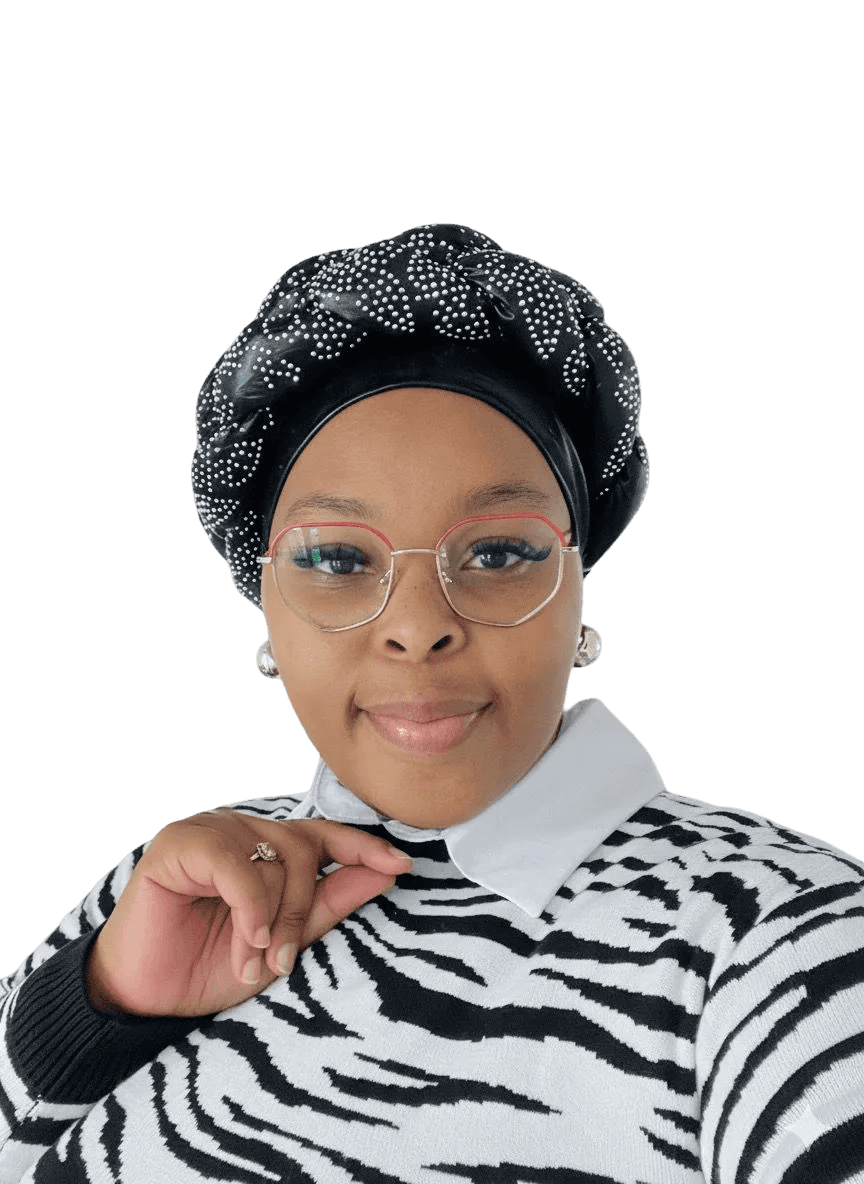


Family and friends gathered to honour and celebrate the life of former Deputy President Phumzile Mlambo-Ngcuka, remembering her life, service and contribution to South Africa. Image: Supplied.
Phumzile Mlambo-Ngcuka: A life that expanded the meaning of leadership, service and women’s emancipation
The passing of Dr Phumzile Mlambo-Ngcuka marks the loss of a distinguished daughter of South Africa, a freedom fighter, an educator, a political leader and an international champion of equality and human dignity.

The passing of Dr Phumzile Mlambo-Ngcuka marks the loss of a distinguished daughter of South Africa, a freedom fighter, an educator, a political leader and an international champion of equality and human dignity.
Her life was one of service, courage and an enduring commitment to the transformation of society. In remembering her, we must look beyond the positions she occupied and reflect on the generations she influenced, the institutions she helped shape and the possibilities she opened for women and young people across the world.
Dr Mlambo-Ngcuka belonged to a generation of women who understood that the struggle against apartheid could not be separated from the struggle against patriarchy, economic exclusion and social injustice. Her activism, including her leadership in the Natal Organisation of Women, reflected an understanding that the liberation of our country would remain incomplete without the emancipation of women.
She understood that political freedom must translate into material opportunities, dignity and meaningful participation in every sphere of society.
One of the important dimensions of her life that deserves greater recognition is her contribution to youth development.
Long before she occupied the highest offices in our democratic government, Dr Mlambo-Ngcuka was already involved in the development of young people. Her work as a coordinator at the World Young Women’s Christian Association (World YWCA) in Geneva included establishing a global programme for young women.
This was not incidental to her political journey. It demonstrated an enduring conviction that young people, particularly young women, must be equipped with the knowledge, confidence and opportunities to shape their own futures.
Her subsequent establishment of the Umlambo Foundation further illustrated this commitment. Through its focus on education, teacher development, mentorship and leadership, the foundation reflected her appreciation that transforming society requires investment in the people who shape future generations.
There is an important lesson here for our political movement and our country.
Youth development cannot be reduced to political mobilisation, conferences, slogans or the occasional celebration of young people. It must involve deliberate investment in education, skills development, mentorship, leadership opportunities and economic participation.
We must create conditions in which young people are not merely invited to participate in society but are empowered to lead, innovate and contribute meaningfully to its development.
Her life reminds us that the responsibility of leadership is not simply to occupy positions of influence, but to prepare others to occupy those positions and perform even better.
Her contribution to South Africa’s democratic development was equally significant.
Following the advent of democracy in 1994, she became part of the first democratic Parliament, serving at a critical moment when our country was transitioning from apartheid to constitutional democracy.
She subsequently served as Deputy Minister of Trade and Industry between 1996 and 1999, Minister of Minerals and Energy from 1999 to 2005, and eventually became South Africa’s first woman Deputy President in June 2005.
Her appointment to the country’s second-highest political office was a historic milestone. It was not only an important moment for women in South Africa but also a reflection of the possibilities created by the democratic struggle.
As Minister of Minerals and Energy, she operated in a sector historically characterised by racial exclusion and concentrated economic power. Her tenure included efforts to broaden participation in the mining industry and advance the transformation of the country’s mineral resources sector.
As Deputy President, she was associated with the Accelerated and Shared Growth Initiative for South Africa (ASGISA) and the Joint Initiative on Priority Skills Acquisition (JIPSA), which sought to address structural constraints to economic growth, poverty and unemployment, including the shortage of critical skills.
These responsibilities were undertaken during a defining period in the consolidation of our democratic state.
Her political journey teaches us that leadership must be accompanied by the willingness to confront difficult questions of economic transformation, institutional development and the redistribution of opportunities.
The struggle for political freedom must continuously be translated into the struggle for economic freedom and social justice.
Perhaps one of the most remarkable chapters of her public life was her appointment in 2013 as Executive Director of UN Women, serving as an Under-Secretary-General of the United Nations until 2021.
It was a significant achievement for a South African woman to lead an international institution mandated with advancing gender equality and the empowerment of women.
However, what made her international contribution particularly meaningful was the manner in which she used that platform to strengthen global conversations about women’s rights, leadership, economic participation and the elimination of gender-based violence.
During her tenure, she championed initiatives such as the HeForShe solidarity movement and Generation Equality, mobilising governments, civil society, the private sector and other stakeholders around the advancement of women’s rights.
She understood that gender equality could not be achieved through the efforts of women alone. It required a collective commitment from society, including men, institutions, governments and the private sector.
Her leadership at UN Women demonstrated that South Africans have an important contribution to make to the international community.
She carried with her the experiences of a country that had fought against racial oppression and used that experience to contribute to a global struggle against gender discrimination and inequality.
Her journey from the liberation struggle to the highest levels of international leadership should inspire us to develop leaders who are locally grounded but globally conscious.
For me, there are several important lessons that emerge from the life and contribution of Dr Mlambo-Ngcuka.
First, leadership must be about service rather than status: Public office is not an end in itself. The positions we occupy must be measured against the difference we make in people’s lives. Her journey through education, civil society, government and international institutions reminds us that leadership is a responsibility that must always serve a greater purpose.
Second, we must deliberately develop the next generation: We cannot continuously speak about the future of our country while failing to invest in the people who will inherit it. Young people need access to quality education, mentorship, skills, opportunities and meaningful platforms for leadership. We must move beyond celebrating young people to actively preparing them.
Third, women’s emancipation must remain central to our democratic project: The advancement of women cannot be treated as a secondary issue or an administrative responsibility. It must be reflected in our political institutions, economic policies, workplaces and communities. We must continue confronting patriarchy, gender-based violence and the structural barriers that prevent women from participating equally in society.
Fourth, political leadership must be intellectually grounded and continuously evolving: Her journey from teaching and activism to government and international leadership reminds us of the importance of education, continuous learning and the ability to understand society beyond the immediate demands of political office.
Finally, we must build institutions that outlive individuals: A meaningful legacy is not simply what people remember about us. It is also what continues to function, grow and benefit society long after we have left a particular position. Her contribution to education and leadership development through the Umlambo Foundation is an important example of this principle.
As members of the African National Congress, we must also reflect on what her life means for our movement.
The ANC has a proud history of producing women leaders who have made extraordinary contributions to the liberation struggle and the democratic state. Dr Mlambo-Ngcuka was among those who helped demonstrate that women must not merely be participants in the transformation of our country but must occupy leading roles in directing its political, economic and social development.
We must ensure that the next generation of women leaders is not forced to fight the same battles for recognition, inclusion and opportunity that previous generations fought.
We must also ask ourselves whether our structures are doing enough to identify, mentor and develop young leaders, particularly young women from working-class communities and historically disadvantaged backgrounds
The greatest tribute we can pay to her is not simply to praise her achievements, but to recommit ourselves to the values and causes that defined her public life.
South Africa has lost a remarkable daughter. The African continent has lost an accomplished leader. The international community has lost a committed advocate for women’s rights and human dignity.
But her contribution remains part of our country’s democratic inheritance.
Dr Phumzile Mlambo-Ngcuka’s life teaches us that the true measure of leadership is not how high one rises, but how many others are empowered to rise alongside and after us.
May we honour her by continuing the work of building an equal, just and prosperous society in which every woman and every young person has the opportunity to realise their full potential.
May her soul rest in peace.
By Donald Selamolela, Member of the National Executive Committee of the African National Congress.