
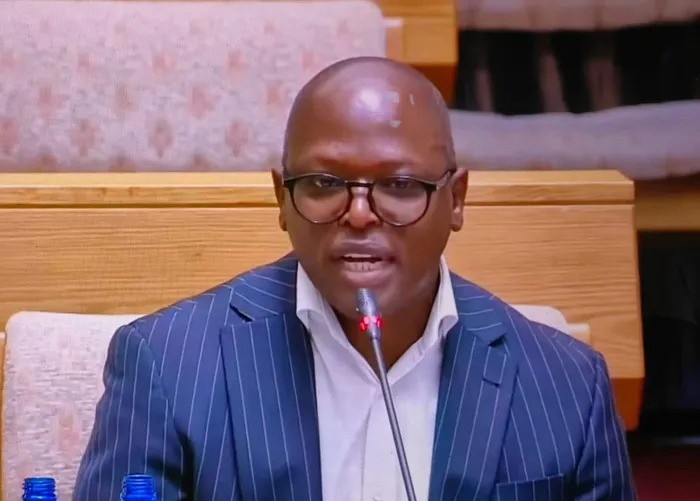

The committee has called for Fani’s suspension following findings in a report by the SIU, which detailed alleged procurement irregularities during his time at the National Treasury. Image: Supplied.
SIU
Parliament welcomes planned suspension of SAPS procurement head Molefe Fani
Portfolio Committee on Police chairperson Ian Cameron says the intended suspension of Lt Gen Molefe Fani is a necessary step toward accountability within the South African Police Service.

The Chairperson of Parliament’s Portfolio Committee on Police, Ian Cameron, has welcomed reports that a letter of intention has been issued to suspend SAPS Divisional Commissioner for Supply Chain Management, Lieutenant General Molefe Fani.
Cameron described the move as “long overdue,” saying it signals a shift toward meaningful accountability within the South African Police Service (SAPS).
“The imminent consequence management against Lt General Fani is long overdue and signifies that the leadership of SAPS is not merely paying lip service to accountability,” Cameron said.
The committee has repeatedly called for Fani’s suspension following findings contained in a report by the Special Investigating Unit (SIU), which detailed alleged procurement irregularities during his time at the National Treasury. Despite these findings, Fani was later appointed to a senior SAPS role overseeing procurement.
Cameron questioned that decision, saying it raised serious concerns about governance and oversight within one of the country’s largest departments.
He further pointed to SAPS’s controversial contract with Medicare Tshwane, noting that allegations linked to Fani’s leadership suggest a pattern of procurement policy violations. While a criminal case related to the matter is ongoing, Cameron said the SIU report alone warranted decisive action.
The committee also welcomed the suspension as a step toward preventing officials implicated in wrongdoing from avoiding accountability by moving between positions within the public service.
However, Cameron cautioned that suspensions alone are not enough.
“In the short to medium term, suspensions are necessary, but they are not a substitute for long-term accountability. There must be effective consequence management for any SAPS official implicated in wrongdoing,” he said.
He revealed that under Fani’s leadership, SAPS recorded irregular expenditure amounting to R640 million in the 2024/25 financial year an increase of about 140% despite the division being tasked with ensuring procurement compliance.
Cameron reiterated the committee’s concerns about ethical leadership within SAPS and called for lifestyle and skills audits, particularly among senior officials.
The committee is expected to engage SAPS leadership soon to assess the number of suspended officers, the duration of suspensions, and steps being taken to fast-track disciplinary processes.