

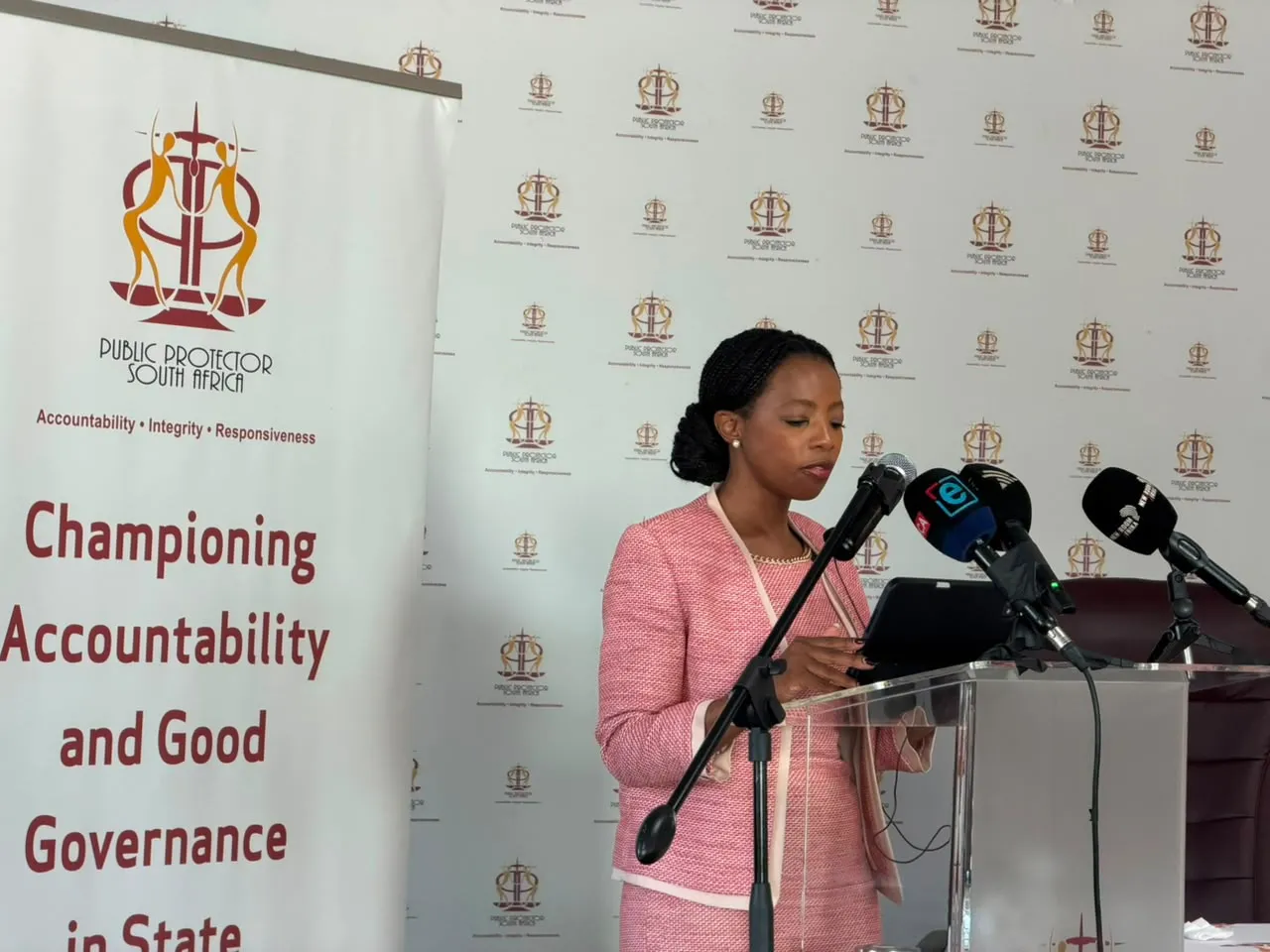
Public Protector Advocate Kholeka Gcaleka pointed to governance instability within the scheme, which culminated in the dissolution of the NSFAS board. Image: X
Public Protector
1Min
South Africa
More than 40 000 students improperly funded by NSFAS, Public Protector finds
Public Protector Advocate Kholeka Gcaleka says more than 40 000 students at 76 institutions of higher learning were improperly funded by NSFAS to the tune of R5.1 billion, with only R2 billion recovered to date.

More than 40 000 students across 76 institutions of higher learning were improperly funded by the National Student Financial Aid Scheme (NSFAS), resulting in an estimated R5.1 billion in irregular funding, according to Public Protector Advocate Kholeka Gcaleka.
Gcaleka released the findings of a systemic investigation into challenges within NSFAS in Pretoria on Tuesday.
The investigation was launched amid recurring student protests, delays in funding and concerns surrounding the governance and administration of the scheme.
Gcaleka said that only about R2 billion of the improperly disbursed funds has been recovered so far.
She said developments within NSFAS further reinforced the need for a closer examination of the scheme and the broader higher education funding system.
“The decision to initiate this investigation was further informed by subsequent developments which re-emphasised concerns regarding the governance and administration of NSFAS and the broader higher education funding system,” Gcaleka said.
Among the developments highlighted by the Public Protector was the Auditor-General of South Africa’s disclaimer audit opinion on NSFAS’s 2024/25 annual financial statements.
Gcaleka also pointed to governance instability within the scheme, which culminated in the dissolution of the NSFAS board.
NSFAS was subsequently placed under administration, although that decision was later overturned by the courts.
The findings come amid continued scrutiny of the scheme’s administration and its ability to ensure that financial aid reaches eligible students while preventing the misuse of public funds.