

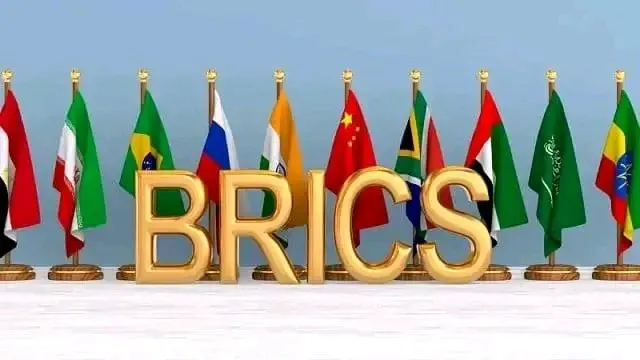
South Africa has already been part of efforts to expand financial cooperation among BRICS development banks. Image: Supplied.
China
1Min
South Africa
BRICS: A force of purpose in a multipolar world
The 2026 BRICS New Delhi Declaration acknowledged progress by the BRICS Payment Task Force in examining the interoperability of payment and messaging channels, while also supporting discussions on trade settlements and investment using BRICS local currencies.
The significance of BRICS is increasingly being seen not simply in the number of countries around the table, but in the practical economic cooperation taking place between its members.
In a changing global economy, BRICS is providing countries of the Global South with an opportunity to strengthen trade, investment and financial cooperation while creating greater room for countries to conduct business on terms that reflect their own economic interests.
One of the most interesting developments is the work being done around cross-border payments and the use of local currencies.
For years, international trade has often required transactions between countries to pass through financial systems heavily connected to the US dollar. BRICS cooperation is beginning to demonstrate that there are other possibilities.
The objective is not necessarily to create a single BRICS currency. Instead, member countries are exploring practical mechanisms that can make it easier to trade and settle transactions using their own national currencies.
The 2026 BRICS New Delhi Declaration acknowledged progress by the BRICS Payment Task Force in examining the interoperability of payment and messaging channels, while also supporting discussions on trade settlements and investment using BRICS local currencies.
This is where the idea of a multipolar world becomes more than a political slogan.
When businesses and financial institutions can increasingly transact across borders using national currencies and interconnected payment systems, countries gain additional options. The BRICS Cross-Border Payments Initiative is specifically aimed at making payments faster, cheaper, more accessible, efficient and secure.
For ordinary businesses, the importance of this should not be underestimated.
A South African company importing goods from China, for example, could potentially benefit from financial arrangements that reduce unnecessary currency conversions and transaction costs. Similar opportunities can emerge between South Africa, India, Brazil, the UAE and other BRICS economies as payment infrastructure develops.
South Africa has already been part of efforts to expand financial cooperation among BRICS development banks, including arrangements involving financing in local currencies. The South African National Treasury says these mechanisms are intended to reduce exchange-rate risk and currency exposure in cross-border trade.
This is the practical side of BRICS.
It is not simply about declarations made at summits. It is about building institutions, payment channels, banking relationships and financial mechanisms that can support greater economic cooperation.
At the same time, expectations should remain realistic. BRICS is not yet a unified monetary bloc, and its members have different currencies, financial regulations, economic priorities and levels of integration. Analysts have also noted that cross-border use of these systems remains relatively small compared with domestic payment activity.
But transformation does not happen overnight.
The importance of BRICS may ultimately lie in its ability to expand the choices available to emerging economies. A world in which countries have more than one pathway for trade, investment and financial settlement is a world with greater economic diversity.
That is the deeper significance of BRICS.
It represents an attempt to build cooperation around shared economic interests while allowing individual countries to retain their own currencies, policies and national priorities.
In a multipolar world, purpose does not necessarily mean everyone follows the same path. It can mean different countries finding practical ways to work together.
BRICS is beginning to put that principle into practice.
By Masibongwe Sihlahla, Independent writer, Social Justice Activist and chairperson, Friends of Brics Network