Nersa
1Min
South Africa
SAFTU hails high court's ruling against Eskom's R54 billion tariff clawback
In a landmark ruling, the Pretoria High Court blocks Eskom's R54 billion tariff clawback, a decision celebrated by SAFTU as a victory for consumers. Read on to discover the implications for South Africa's energy landscape and the calls for sustainable change in the power sector.

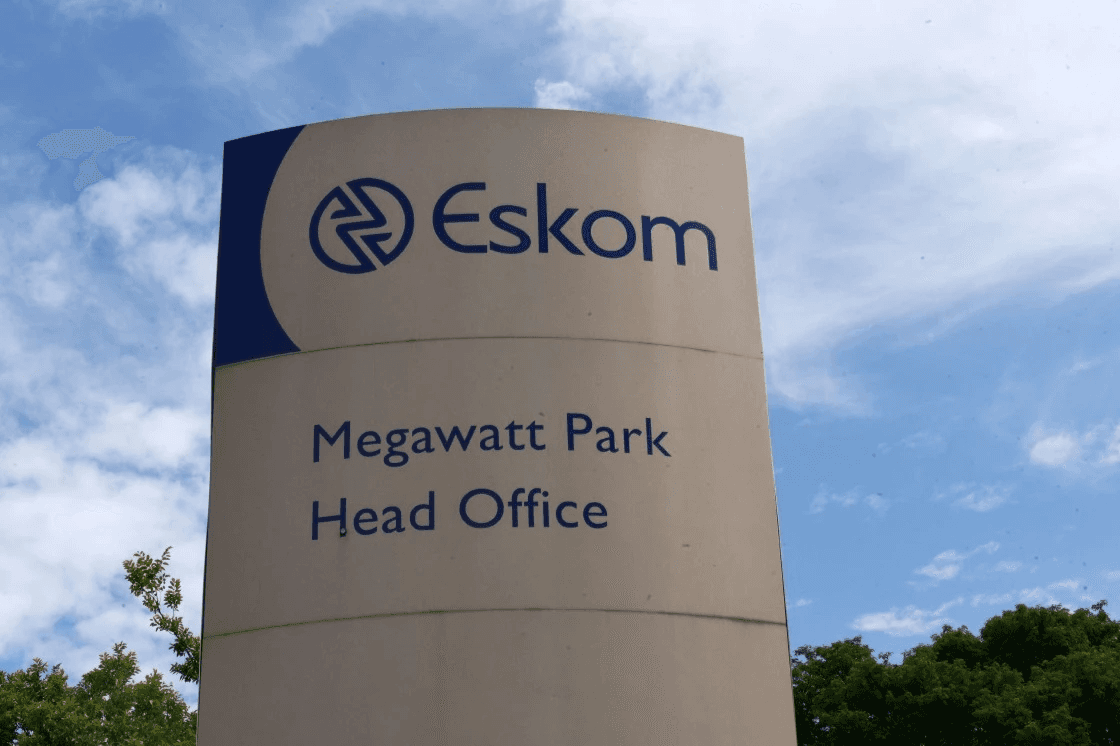
The South African Federation of Trade Unions (SAFTU) has lauded the Pretoria High Court's recent ruling that successfully set aside Eskom’s controversial R54 billion tariff clawback agreement with the National Energy Regulator of South Africa (NERSA).
This pivotal court decision prevents Eskom from imposing a significant tariff increase that would have adversely impacted households, workers, and the broader economy.
The High Court in Pretoria handed down the ruling on Sunday, the Johannesburg-based website reported, citing court documents.
Judge Jan Swanepoel said the parties didn’t provide an explanation on how they arrived at the figure, adding that the “compromise was a mere thumb-suck.
“The proposition put by Nersa and Eskom, that a major amendment could be made to the tariff decision without public participation, is untenable and offends the principle of transparency enshrined in the act [National Energy Regulator Act] and the Electricity Regulation Act,” said judge Jan Swanepoel.
In a powerful statement following the ruling, SAFTU spokesperson Newton Masuku expressed that the case needed to be challenged vigorously. He emphasised concerns that such critical matters could be decided behind closed doors, devoid of substantial public input.
"This judgment is a significant victory for electricity consumers who have endured relentless tariff hikes for over a decade, while their living standards have deteriorated and wages have stagnated," Masuku remarked. He underscored the necessity for regulatory decisions to adhere to principles of transparency, accountability, and participatory governance.
In light of the ruling, SAFTU has called for immediate action from Eskom and NERSA, urging them to abandon any attempts to claim the clawback amount, arguing that there is no social, economic, or moral justification for such a course, particularly given Eskom's announcement of a substantial turnaround and increased profit levels.
"Working-class households, the unemployed, small businesses, and struggling industries must be given immediate relief," Masuku added, outlining the federation's stance. Their vision goes beyond mere relief; they advocate for a comprehensive review of the steep electricity tariffs that have plagued consumers over the last 15 years.
Masuku pointed out that past tariff increases have fuelled de-industrialisation, destroyed jobs, exacerbated poverty and inequality, and diminished the competitiveness of the South African economy. "Consumers cannot be endlessly punished to compensate for governance failures, cost overruns, and flawed policy choices," he stated emphatically.
In a bold call to action, SAFTU has also demanded that existing and future contracts with Independent Power Producers (IPPs) be cancelled, asserting that these agreements have entrenched high electricity prices that primarily benefit private interests over public welfare.
"Instead, Eskom must be empowered and mandated to roll out publicly owned renewable energy at scale," Masuku urged. He envisioned a transition that would leverage Eskom’s balance sheet, technical capabilities, and grid infrastructure to facilitate a sustainable, worker-led transition focused on affordable electricity, job creation, and energy sovereignty rather than private profiteering.
The court's ruling and SAFTU's rapid response underline a growing discontent among consumers over the electricity crisis in South Africa, marking a critical moment in the dialogue surrounding energy equity and governmental accountability in a country perpetually challenged by economic issues.