United States
1Min
South Africa
Maduro pleads not guilty to narco-terrorism charges after "unlawful" Trump abduction
As the geopolitical chess match continues, world leaders are closely monitoring developments, particularly regarding the balance of power in Latin America and the potential resurgence of U.S. influence through oil economics and military intervention.
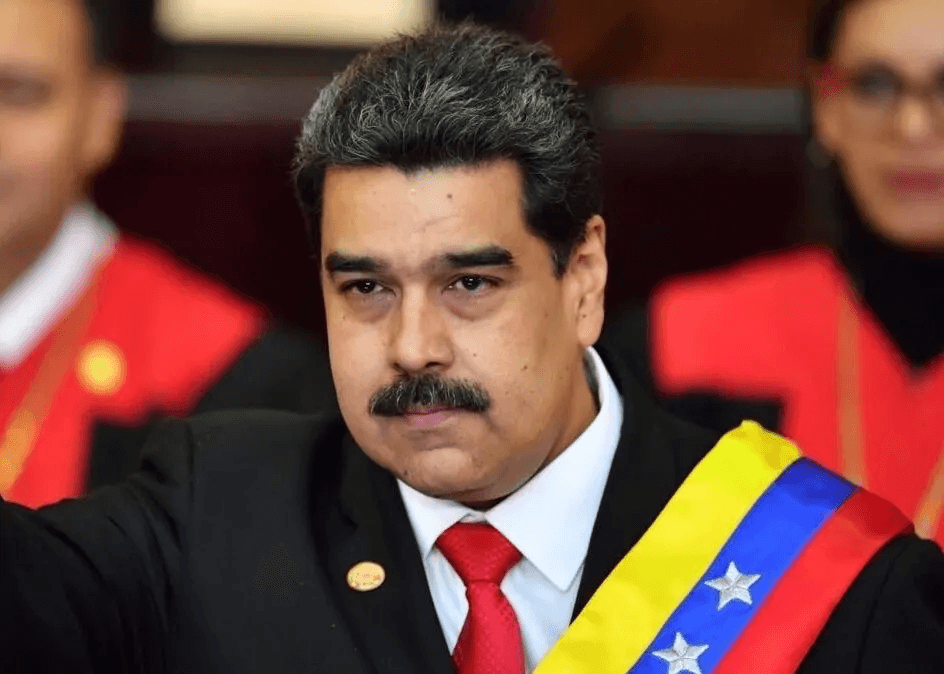
In a dramatic shift in the political landscape, toppled Venezuelan President Nicolás Maduro appeared before a New York federal court on Monday, where his defiance was shown when he pleaded not guilty to "trumped up" charges of narco-terrorism.
This event follows his astonishing capture by U.S. Special Forces, a move that has rattled world leaders and ignited intense debates over legality and the future of Venezuela.
The 63-year-old Maduro faces four criminal counts, including narco-terrorism, conspiracy to import cocaine, and possession of military-grade weaponry. In a tense courtroom atmosphere, he asserted his innocence, stating through an interpreter, “I am innocent. I am not guilty. I am a decent man. I am still president of my country.” However, his pleas were met with interruption by U.S. District Judge Alvin Hellerstein.
Maduro was not alone in his courtroom appearance; his wife, Cilia Flores, also pleaded not guilty. The couple's next court date is scheduled for 17 March. Outside the courthouse, an array of protesters, both supporting and opposing Maduro, gathered, highlighting the division that the ex-leader elicits even among his own compatriots.
Accusations of a vast drug network
According to U.S. authorities, Maduro has been overseeing a cocaine-trafficking network linked to notorious crime groups including Mexico’s Sinaloa and Zetas cartels, Colombian FARC rebels, and Venezuela’s own Tren de Aragua gang. Maduro has consistently denied these claims, positing that they serve as a façade for broader imperialistic motives directed at Venezuela’s oil-rich resources.
In response to the turmoil precipitated by Maduro’s arrest, the Venezuelan government has issued an emergency order mandating law enforcement to pursue and detain anyone perceived to support the recent U.S. military intervention. Diplomatically, the UN Security Council convened on Monday, addressing the implications of the raid that has drawn condemnation from Russia, China, and Venezuela’s leftist allies.
UN Secretary-General Antonio Guterres expressed apprehension regarding the potential for increased instability in Venezuela and the legality of President Donald Trump’s aggressive intervention, marking it as the most significant U.S. incursion into Latin America since the 1989 invasion of Panama.
Details of the operation unfold
Maduro's court appearance was marked by high security; he was transported by helicopter from a Brooklyn detention centre, shackled and flanked by armed guards. Chief Judge Hellerstein opened proceedings with a summary of the charges, allowing Maduro a moment to affirm his identity in Spanish. Notably, while prosecutors described an extensive timeline of Maduro's involvement in drug trafficking dating back to his political beginnings in 2000, his attorney, Barry Pollack, anticipated prolonged legal battles over what he characterised as “military abduction.”
The court's focus has also shifted to Cilia Flores, with her legal representation raising alarms about her health following an allegedly violent apprehension in Caracas. Federal authorities had originally indicted Maduro in 2020 as part of an expansive narcotics investigation, and the updated charges now include his wife.
The political ramifications
Domestically, Maduro’s administration has oscillated between defiance and a potential willingness to negotiate with the Trump administration. Following the capture, acting Venezuelan President Delcy Rodriguez softened her initial condemnations, advocating for cooperation, stating, “We invite the US government to work together on an agenda of cooperation.”
Trump, who has expressed a keen interest in Venezuela’s oil reserves, asserted that American companies would reclaim and rebuild the nation’s oil infrastructure, vowing that “We’re taking back what they stole.” Currently, Venezuela possesses the world’s largest oil reserves, yet production has plummeted due to mismanagement and sanctions, averaging a mere 1.1 million barrels per day.