
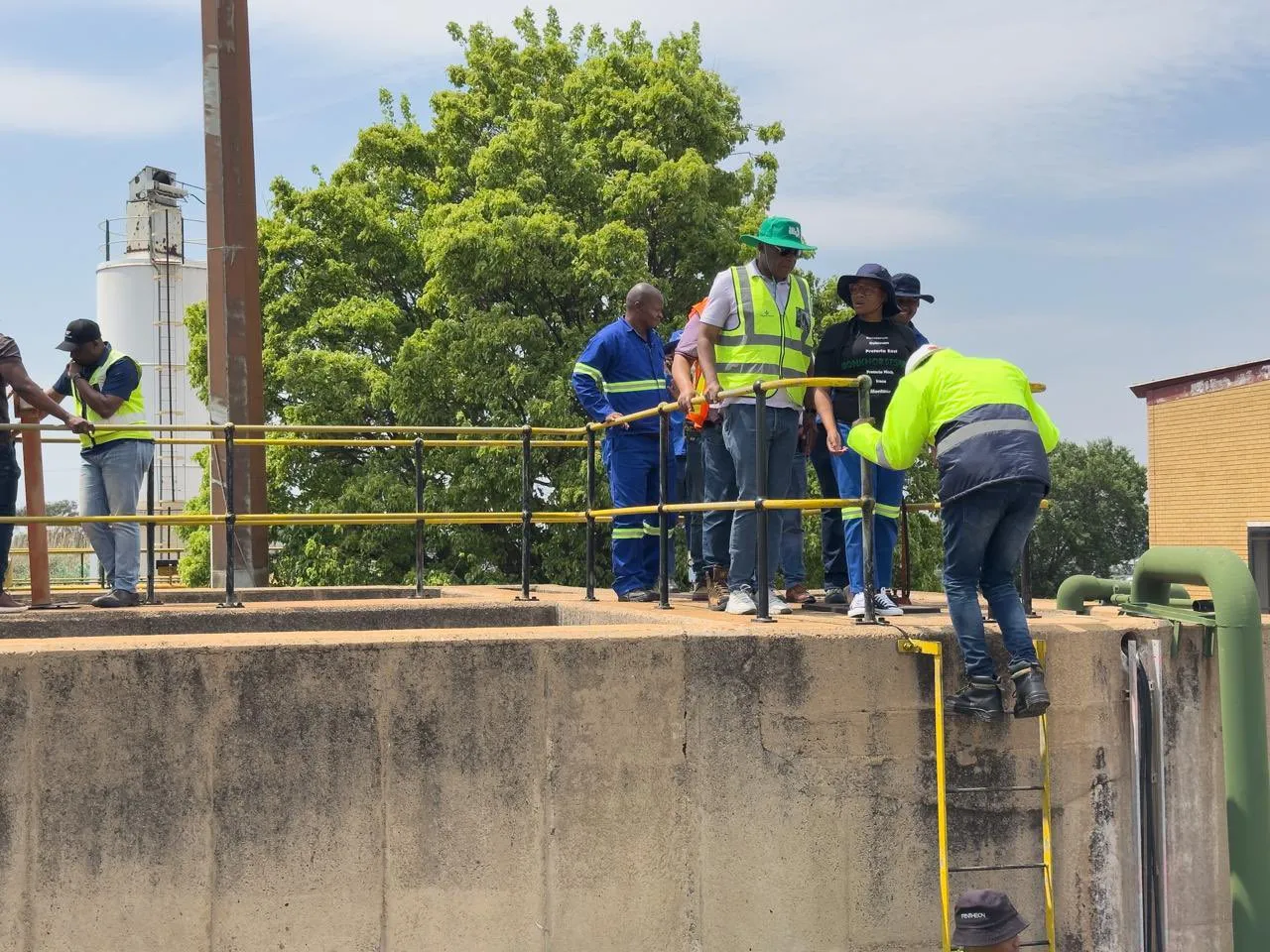

An investigation found that the City of Tshwane failed to warn residents that the water was unsafe. Image: Supplied.
Nasiphi Moya
1Min
South Africa
408 fall ill after Tshwane water treatment plant supplied unchlorinated water for weeks
More than 400 people, mostly children under four, have developed gastrointestinal illnesses in Bronkhorstspruit after contaminated water was supplied to communities for weeks without chlorination. An investigation found that the City of Tshwane failed to warn residents that the water was unsafe.

An investigation has linked 408 cases of gastrointestinal illness in Bronkhorstspruit and surrounding communities to contaminated water supplied by the City of Tshwane, with authorities revealing that water from a local treatment plant went without chlorination for three weeks.
The joint statement issued by the national Health and Water and Sanitation departments, the Gauteng government and the City of Tshwane on Monday revealed that the Bronkhorstspruit Water Treatment Works (BWTW) supplied water without chlorination between 24 September and 14 October.
The investigation found that the municipality had experienced difficulties with its chlorine supplier, leaving water from the plant untreated with chlorine despite the risk posed by pollution in the Bronkhorstspruit River.
Authorities also found that the City of Tshwane had failed to warn residents that the water was unsafe for drinking and other household uses, including cooking, washing and bathing.
Between 7 and 18 October, 408 cases of gastrointestinal illness were reported among residents of Zithobeni, Bronkhorstspruit, Dark City, Rethabiseng and Sokhulumi in Tshwane's Region 7. Most of those affected are children under the age of four.
No deaths had been reported by Monday.
The number of new cases peaked on 13 October, when 72 cases were recorded. A further 16 cases were reported on Sunday, 18 October.
Tests detect multiple pathogens
Laboratory tests conducted by the National Institute for Communicable Diseases (NICD) detected norovirus, Campylobacter and Shigella in three of four stool specimens analysed, alongside other pathogens capable of causing stomach cramps and diarrhoea.
No cholera bacteria were found in the sampled stool specimens.
Water quality tests conducted by the Department of Water and Sanitation on 14 October also detected extremely high levels of E. coli and total coliforms in water from the treatment plant and the Ekandustria and Zithobeni reservoirs.
Authorities said the presence of multiple pathogens and the rapid spread of illness pointed to a common water supply as the likely source of infection.
The Department of Water and Sanitation has appointed the Water Research Commission to conduct independent water quality tests and investigate the causes of the contamination. Testing began on 18 October, with results expected from Wednesday. The investigation report is expected by 28 October.
Residents warned not to use tap water
The City of Tshwane closed the treatment plant on 14 October after the contamination was identified. Although the chlorine supply was restored by 15 October, the plant reopened to supply water into the distribution system on 16 October, with residents warned that the water was not yet safe to drink.
Authorities have now instructed residents in areas supplied by the plant not to use tap water for drinking, cooking, bathing, brushing their teeth, washing food or washing clothes.
The water may only be used for flushing toilets.
Residents have also been instructed to discard previously stored water and disinfect their water containers using household bleach.
The municipality has been distributing drinking water through tankers since 14 October, sourcing the water from the Cullinan Water Treatment Works. Laboratory tests conducted by the municipality and the Department of Water and Sanitation indicate that this alternative supply is safe to drink.
The City is increasing its tanker supply, with 36 tankers expected to serve affected communities. Authorities said the tanker water would undergo continuous testing.
Sewage pollution and failing infrastructure
The investigation found that the Bronkhorstspruit River, which supplies the treatment plant, is heavily polluted by sewage from dysfunctional wastewater treatment works under Victor Khanye Municipality and malfunctioning sewage pump stations operated by the City of Tshwane.
The investigation also identified failures at the Bronkhorstspruit Water Treatment Works, including problems with pumps, sand filters and other mechanical equipment.
The municipality is working to appoint Rand Water as an implementing agent to improve the plant's performance and develop an infrastructure improvement plan with the Department of Water and Sanitation.
It remains unclear when the plant will again be able to supply water that residents can safely drink.
The City said the refurbishment and upgrading of the plant had been a longstanding priority, with more than R107 million spent or committed to the project over a three-year period, including R21 million in the current financial year.
Authorities move to address accountability
The investigation has prompted accountability steps by the Department of Water and Sanitation against those responsible for the pollution and failures to comply with water and sanitation standards.
Ministers of Water and Sanitation Pemmy Majodina and Health Dr Aaron Motsoaledi, Gauteng Premier Panyaza Lesufi and Tshwane Executive Mayor Nasiphi Moya met on Sunday to review the response.
Health teams have been deployed to affected communities since 13 October, while Bronkhorstspruit Hospital has established an isolation area and additional beds to manage patients.
Most patients have received rehydration treatment and been discharged within a day. A four-level surge plan is in place to provide additional beds and staff and transfer patients to other hospitals if necessary.
Health promoters will continue household awareness campaigns on hygiene, safe water storage, container disinfection and the precautions residents must follow.
Residents who develop symptoms are urged to seek medical attention early and report suspected cases to their nearest healthcare facility or local health authority.